
WHERE THE WILD CONNECTS US
Written by Michael Solazzo
This April, Wild Tomorrow Junior Board Member, Michael Solazzo, travelled with his fiancé Emily to volunteer with Wild Tomorrow at the Greater Ukuwela Nature Reserve. Ahead of the trip he had studied wildlife corridors while pursuing his Master of Science in Sustainability Management at Columbia University — making the experience especially meaningful as he witnessed in the wild what he had previously read about in academic papers. Read his reflections about wildlife corridors and connectivity not only to wildlife but people too in our latest blog below.
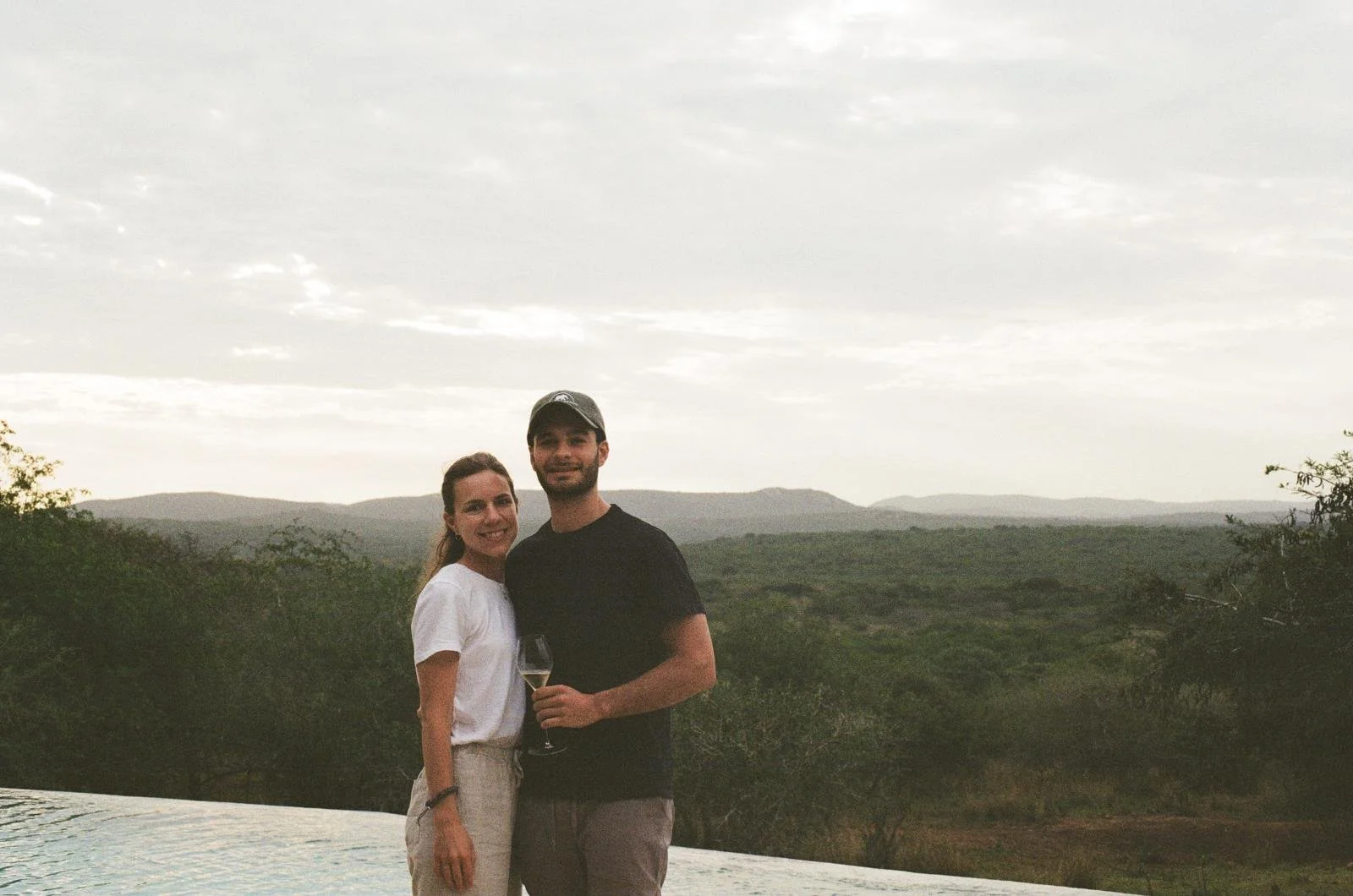
Michael and his fiancé, Emily, in South Africa with Wild Tomorrow.

Brody! Photo Credit: Emily Ann
As the volunteers step out of the vehicle at the Wild Tomorrow Conservation Centre, they hear a soft pounding coming closer and closer. This was my first time in South Africa; I wasn’t sure what was barreling my way. My guard immediately went up as I prepared for a lion, leopard or hippo. My shoulders relaxed when I saw Brody, a Corgi, the unofficial mascot of Wild Tomorrow’s Conservation Centre. Brody’s wagging butt was the first warm welcome we volunteers would receive.
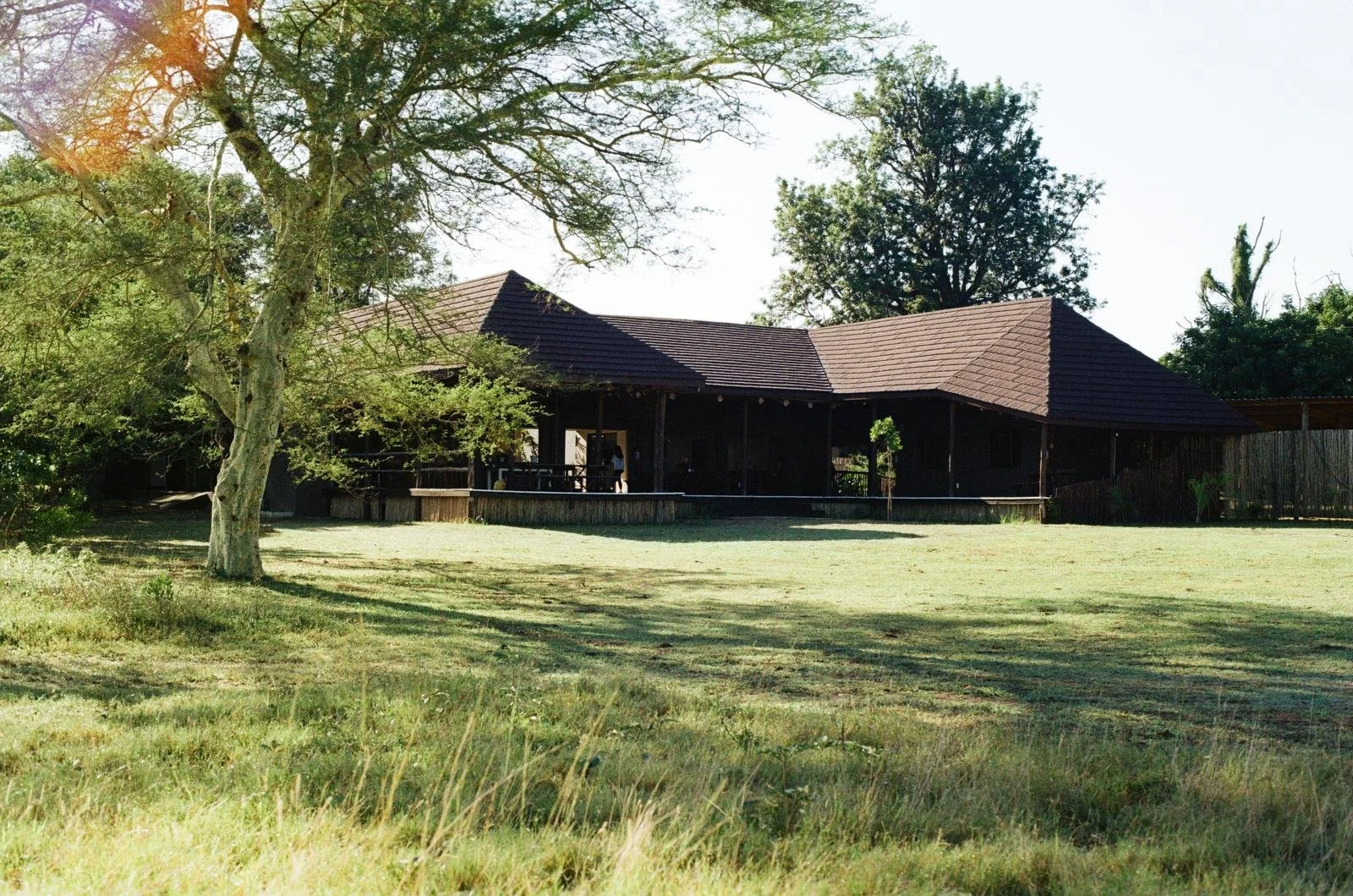
The Wild Tomorrow Conservation Centre, Photo Credit: Emily Ann
Once settled into our accommodations at the Wild Tomorrow Conservation Centre, the volunteers were told the brief story and importance of the work of Wild Tomorrow. Wild Tomorrow legally protects almost 5,000 acres of land in KwaZulu-Natal South Africa. While protecting roughly 5,000 acres is impressive on its own, the true importance of this land lies in its location. The land is not only located in a biodiversity hotspot (1 of 36 in the world), but also connects the MunYaWana Conservancy with the iSimangaliso Wetland Park. This type of connection is called a wildlife corridor.
Biodiversity loss is occurring globally at an alarming rate – caused by the conversion of natural spaces, resulting in habitat loss and fragmentation. While agriculture, mining, and urbanization are major drivers of habitat fragmentation, climate-related events such as wildfires and floods can also cause damage and isolate ecosystems.
Wildlife corridors are critical in combating biodiversity loss by improving the connectivity of various habitats and allowing the movement of animals. Animal movement is crucial to the survival of any species. It allows for daily foraging, seasonal migrations, and the ability to seek new habitats in the event that one becomes compromised by either human impact or natural disasters. Another key benefit of corridors is dispersal, which enables species to find new territories and mates, ultimately improving genetic diversity (Ament, 2014). In fact, a meta-analysis found that, “corridors increase movement between habitat patches by approximately 50% compared to patches that are not connected with corridors” (Gilbert-Norton, 2019).
While species require the ability to move across habitats to survive, corridors help ensure that movement is safe. While fences and highways dissect wild spaces in rural South Africa, at home in the US, roads create deadly crossings for wildlife. An unfortunate statistic is that vehicles collide with 1 to 2 million animals annually in the United States (Ament, 2014). While roads are necessary for the movement of humans, they divide habitats from one another and create danger for both humans and animals.
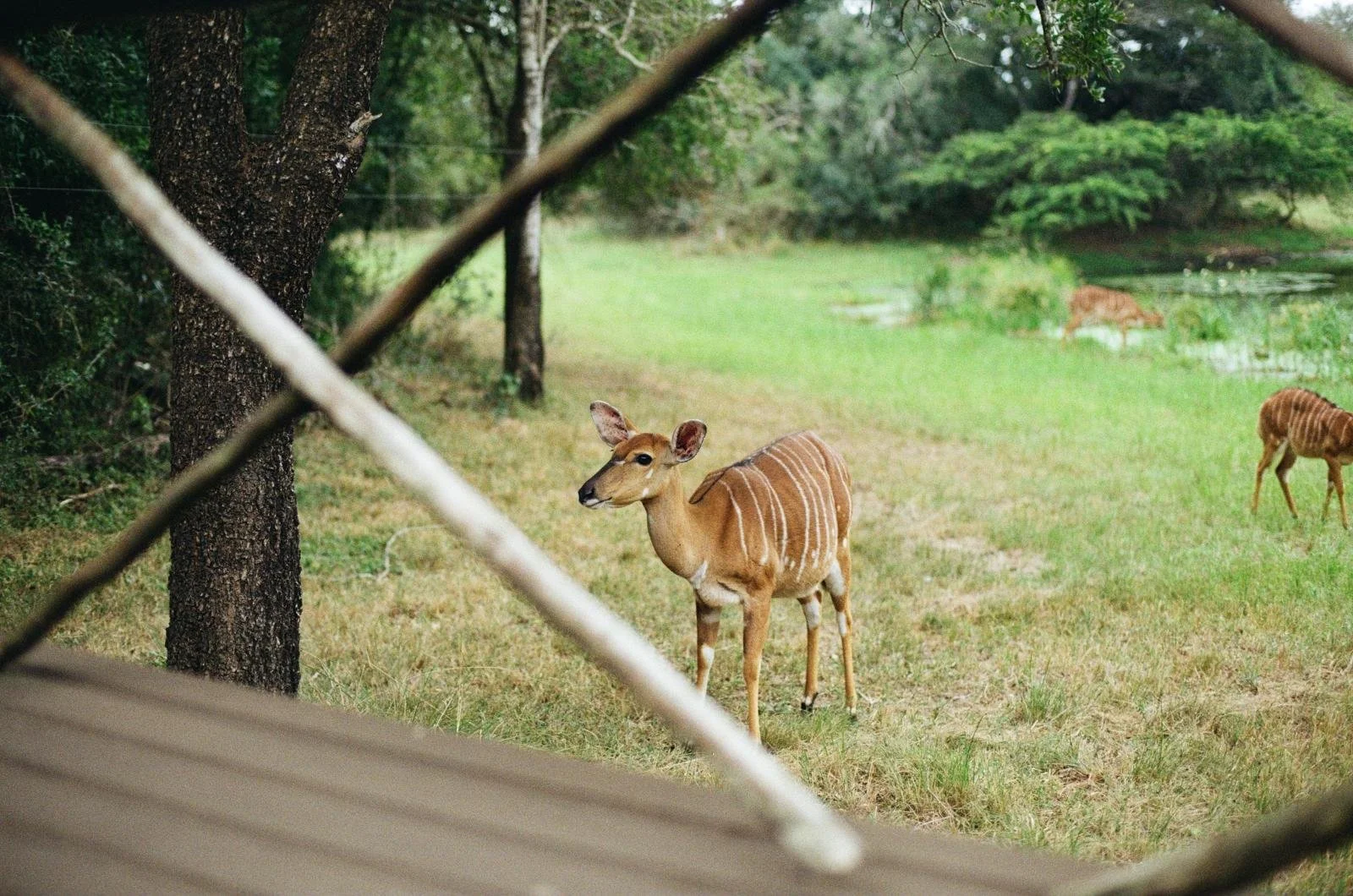
A visiting Nyala at the Wild Tomorrow Conservation Centre. Photo Credit: Emily Ann.
The movement of animals through corridors may be easy to see and understand, but corridors also support the health of plants. Habitat fragmentation and loss is also detrimental to plant life. Most people have a different relationship with animals than they do plants. In some ways, it’s easier to understand animals because they eat, sleep, socialize, and move in a manner similar to us. They also tend to grow, age and pass away in a way we recognize and across a timeframe that we can comprehend.
That same connection can be harder to establish when it comes to plants. We don’t see plants stand up on their roots, walk to a new habitat, or flee from a predator. Their lifecycles and general health are challenging to understand. The good news is that wildlife corridors also support plant health and colonization (the ability to spread to new habitats). An ongoing, 18-year experiment in South Carolina illustrates how habitat connectivity promotes plant colonization and reduces extinction rates. The study found that, “annual colonization rates for 239 plant species in connected fragments are 5% higher and annual extinction rates 2% lower than in unconnected fragments. This has resulted in a steady, nonasymptotic increase in diversity, with nearly 14% more species in connected fragments after almost two decades” (Danschen et al., Science 365, 1478-1480 (2019)).
Biodiversity loss and climate change are often discussed separately, but the two are interconnected. Fortunately, there is a growing understanding that they must be addressed together to mitigate the negative impacts of either. Once again, wildlife corridors are part of the solution. One of the top three messages of a Technical Note published by the World Commission on Protected Areas was, “Protected and Conserved Areas are the most effective tool to address both biodiversity loss and climate change within a time-frame that reflects the required urgency” (World Commission on Protected Areas & IUCN, 2024). Wildlife corridors are a form of protected land and serve as carbon sinks and stores. Essentially, these protected natural ecosystems absorb and store carbon. If these areas are cleared for agriculture, mining, or urbanization, they will no longer be able to perform these vital services and more carbon will be released, increasing greenhouse gas emissions. It is estimated that 30% to 50% of the Earth’s land and water must be conserved and managed to ensure the stability of biodiversity and ecosystem services (World Commission on Protected Areas & IUCN, 2024).
There is so much to consider and learn about wildlife corridors and the positive impacts it can have on ecosystems. After two weeks learning and living with the Wild Tomorrow team, volunteers leave with a deeper appreciation for the connections between plants, animals, habitats and one item not yet touched on: the community. While Wild Tomorrow is at its core a wildlife corridor, it is also creating a “community corridor.” It is connecting people from around the world with KwaZulu-Natal and its local communities. The organization brings global awareness to this amazing region, while also supporting the local community through its programs.
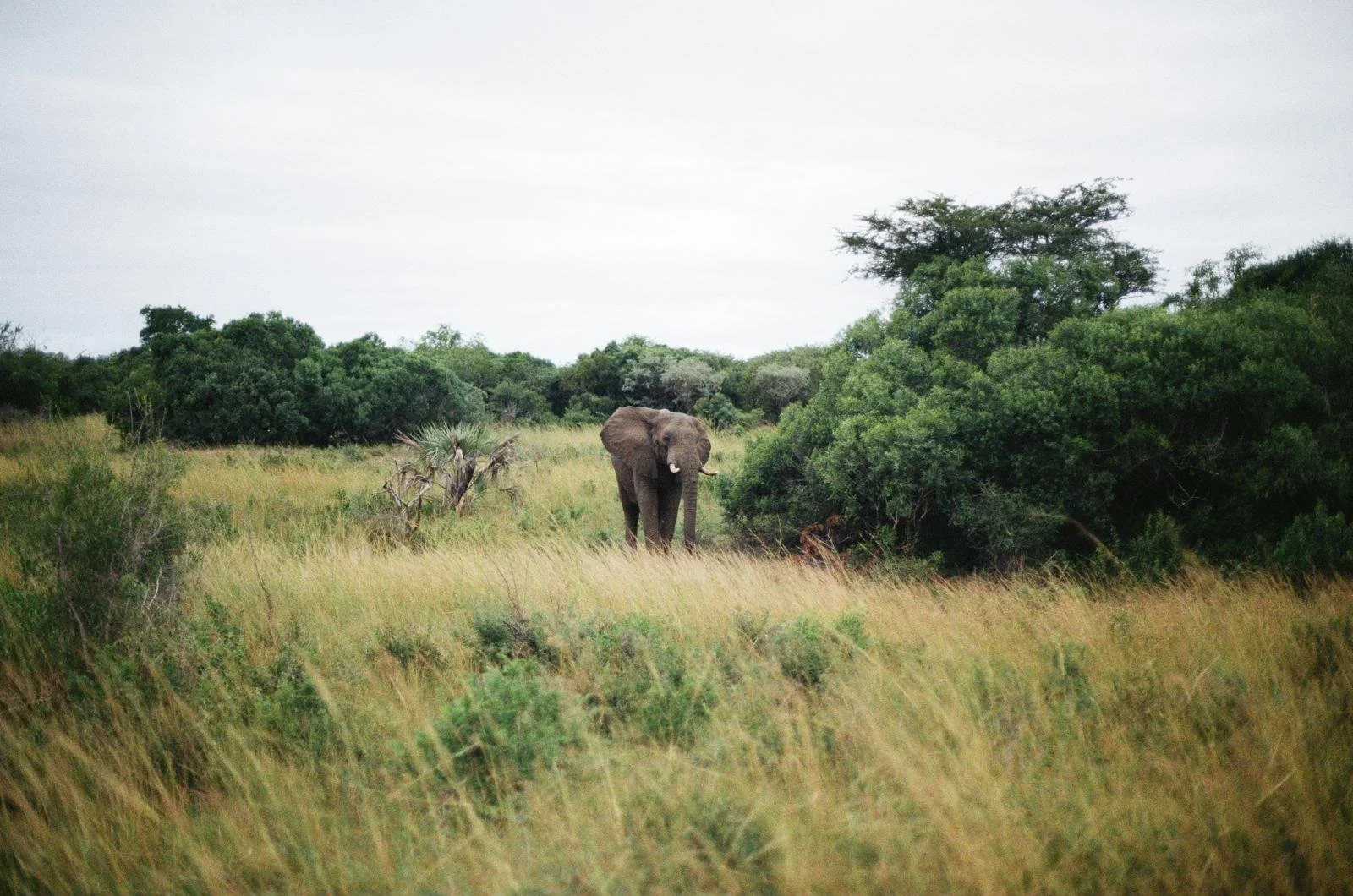
A majestic African Elephant, a species that will benefit from the wildlife corridor Wild Tomorrow is working to protect and establish. Photo Credit: Emily Ann.
During the Conservation Experience Trip this April, the volunteers had the chance to witness just a small piece of this by hosting an Easter Egg hunt for the local community centre and delivering a new fridge to the kitchen of one of the local crèches. The volunteers also had the chance to work alongside the Green Mambas and the Rangers. The Green Mambas are a group of local women trained by Wild Tomorrow to restore wild areas. In many cases, these women provide the sole income for their families. The Rangers protect wildlife from poachers and other threats to the reserve such as wildfires. Wild Tomorrow has provided these individuals with a source of income, education and pride; and their work is critical to the success of Wild Tomorrow’s mission.
This only scratches the surface of the broader issues surrounding biodiversity loss, climate change and the impact of Wild Tomorrow. There is still so much that could be said about the conservation work and experience volunteers encounter on the trip. However, that would duplicate much of the amazing post of Lylie Saurel from Columbia Climate School. Please click here to read that post. Still, one realization from the trip continues to stand out to me.
On our last evening, as we floated down the Mzinene River on a pontoon boat, spotting crocodiles, hippos and a variety of birds, the volunteers were asked what the highlight of the trip was for them. My mind raced through the previous two weeks. Images and sounds of nyala, kudu, kingfishers, lions, cheetahs, leopards, hyenas, elephants, fever trees, fig trees, and termite mounds flickered through my mind along with the smiles and stories of the local community and the Wild Tomorrow team. I couldn’t isolate just one activity or event. I slowly realized that the highlight of the trip was feeling like a kid again. The genuine excitement for the next adventure, story, or lesson. The contagious curiosity that comes from each new explanation of animal or plant behavior. The realization that for the first time in a long time, flashing screens, buzzing phones, and relentless traffic noises weren’t blocking my senses or interrupting a remarkable experience.
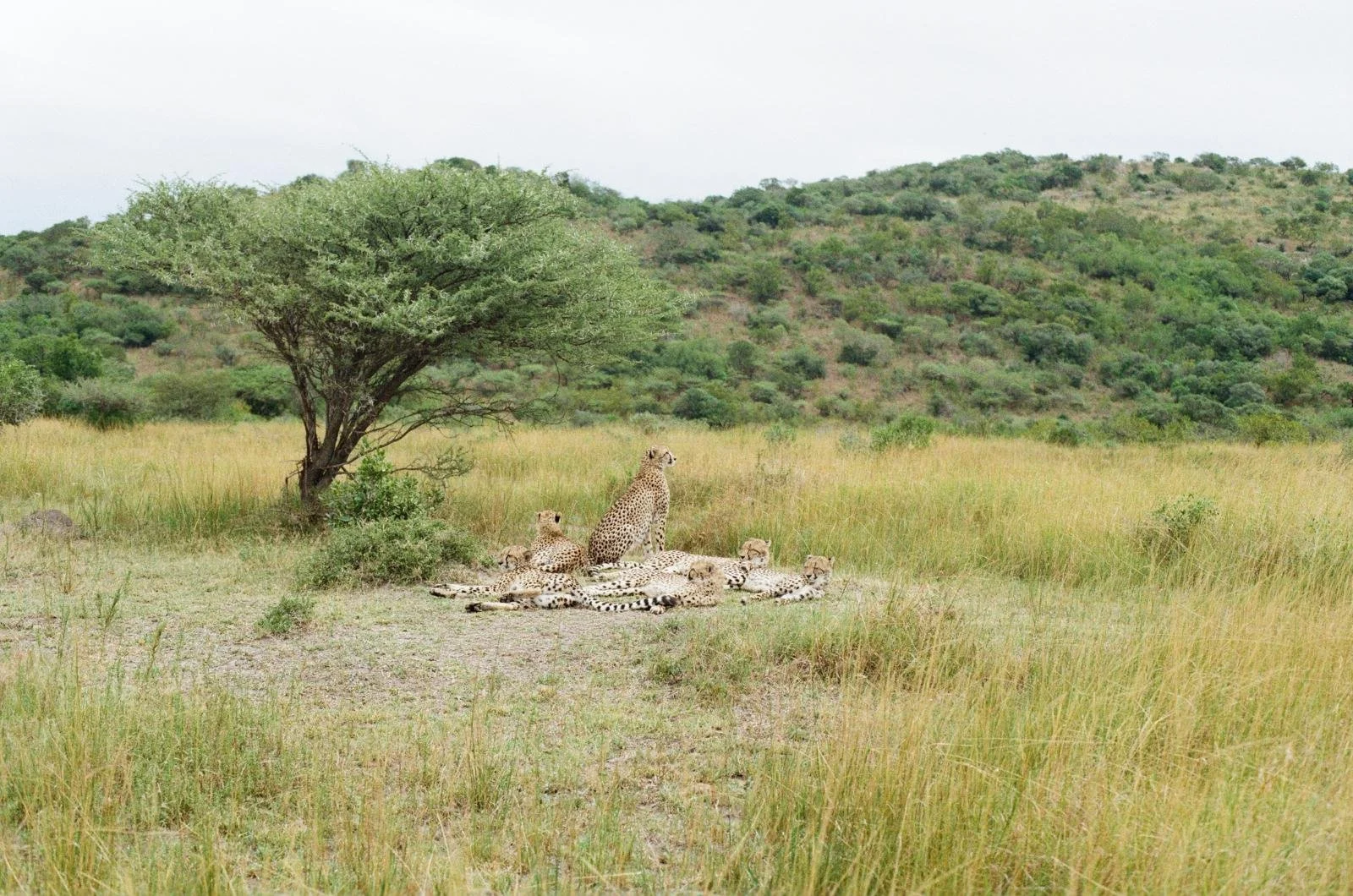
A group of female cheetahs and their cubs at the neighboring Munyawana Conservancy. Photo Credit: Emily Ann
REFERENCES
Ament, R., Callahan, R., McClure, M., Reuling, M., & Tabor, G. (2014). Wildlife connectivity: Fundamentals for conservation action. Center for Large Landscape Conservation. https://largelandscapes.org/wp-content/uploads/2019/05/Wildlife-Connectivity-Fundamentals-for-Conservation-Action.pdf
Damschen, E. I., Brudvig, L. A., Burt, M. A., Fletcher, R. J., Haddad, N. M., Levey, D. J., Orrock, J. L., Resasco, J., & Tewksbury, J. J. (2019). Ongoing accumulation of plant diversity through habitat connectivity in an 18-year experiment. Science, 365(6460), 1478–1480. https://doi.org/10.1126/science.aax8992.
Gilbert-Norton, L., Wilson, R., Stevens, J. R., & Beard, K. H. (2010). A meta-analytic review of corridor effectiveness. Conservation Biology, 24(3), 660–668. doi.org10.1111/j.1523-1739.2010.01450.x. Epub 2010 Feb 19. PMID: 20184653.
World Commission on Protected Areas & International Union for Conservation of Nature. (2023). Role of protected areas in climate change mitigation and biodiversity conservation: Broad policy consensus (Technical Note Series No. 8, Updated). https://iucn.org/sites/default/files/2023-11/revised-tr-8_oct-2023.pdf