
CLEARING THE WAY FOR RECOVERY: HABITAT RESTORATION AT THE GREATER UKUWELA NATURE RESERVE
At Wild Tomorrow’s Greater Ukuwela Nature Reserve in KwaZulu-Natal, habitat restoration is a critical step in repairing landscapes shaped by historic land use, invasive plant pressure, and bush encroachment. Through the removal of alien and invasive species and the careful management of encroacher plants, Wild Tomorrow’s all-female Green Mambas restoration team works to restore ecological balance across grasslands, woodlands, and forest systems. Read more about their essential restoration work in our latest blog post below!
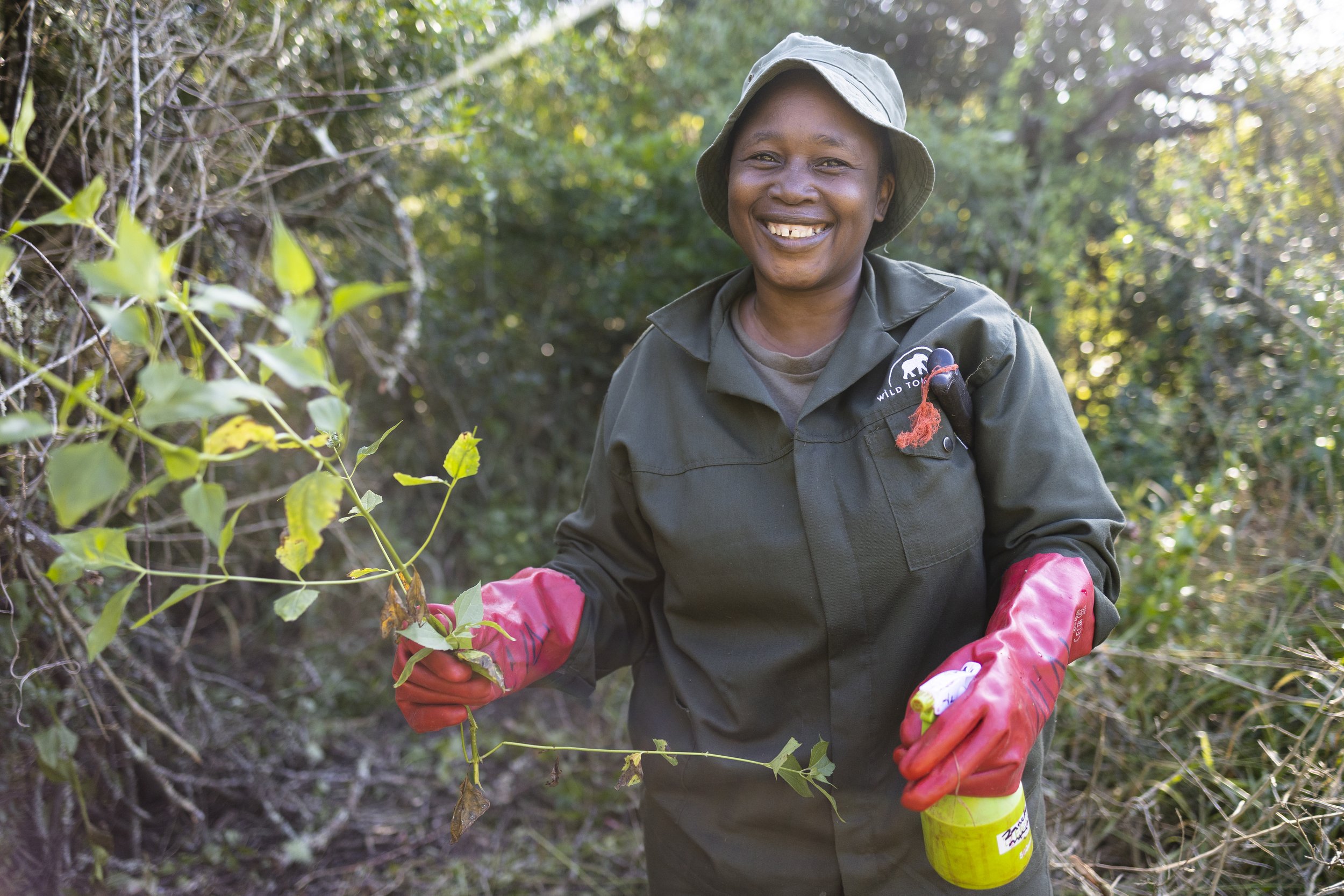
One of Wild Tomorrow’s Green Mambas, Zanele, after successfully removing Chromolaena (Chromolaena odorata) - an invasive plant that threatens native vegetation if left unmanaged.
RESTORING LANDSCAPES THROUGH SCIENCE-BASED ACTION
Habitat restoration is rarely glamorous work…but it is some of the most critical conservation action taking place on the ground. At the Greater Ukuwela Nature Reserve, restoring degraded landscapes requires critical, science-based management to reverse the impacts of historic farming practices, invasive plant spread, and bush encroachment.
Leading this work is Wild Tomorrow’s Green Mambas, our all-female habitat restoration team trained in alien plant removal and long-term ecosystem recovery. Their focus is on restoring balance across grasslands, woodlands, and forest systems so that indigenous vegetation — and the wildlife that depends on it — can recover naturally.
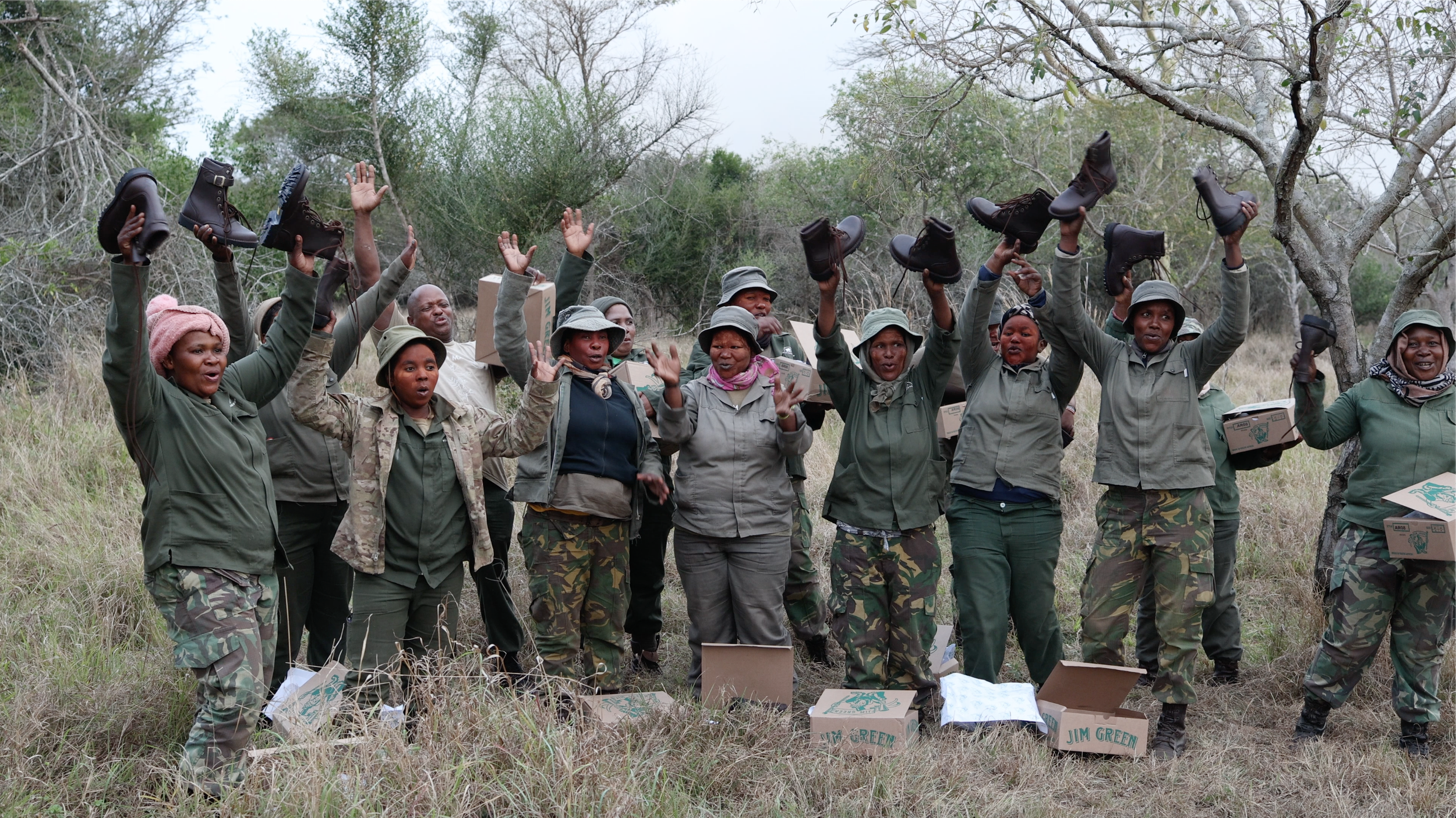
The Green Mambas habitat restoration team (14 women strong) receiving new boots to support their daily work removing invasive plants and restoring ecosystems at the Greater Ukuwela Nature Reserve.
UNDERSTANDING THE CHALLENGE: ALIEN, INVASIVE, AND ENCROACHER SPECIES
Not all problem plants are the same…and effective restoration depends on understanding the difference. At Wild Tomorrow’s Greater Ukuwela Nature Reserve, the main alien and invasive plant species actively removed include:
Chromalaena (Chromolaena odorata)
Brazilian nightshade (Solanum seaforthianum)
Parthenium (Parthenium hysterophorus L.)
Lantana (Lantana camara L.)
Guava (Psidium guava)
These species spread aggressively, outcompete indigenous vegetation, and disrupt natural ecosystem processes. Left unmanaged, they reduce biodiversity, alter soil nutrient cycling, and limit available habitat for wildlife.
Conservation experience volunteers typically assist with the Brazilian nightshade, which has relatively shallow roots and can be safely pulled out by hand. Smaller chromolaena (Chromolaena odorata) plants may also be removed by the root before they establish dense infestations.
In contrast, the sickle bush (Dichrostachys cinerea) presents a different challenge.
Sickle bush is native to South Africa, but at the Greater Ukuwela Nature Reserve it acts as an encroacher species due to historic land mismanagement during the area’s farming past. If left unchecked, it spreads rapidly, smothering grasses and reducing access to suitable grazing and wildlife habitat. Over time, sickle bush can transform open grasslands into dense woodland and eventually forest — a natural process, but not always appropriate for the species that depend on open grassland systems.
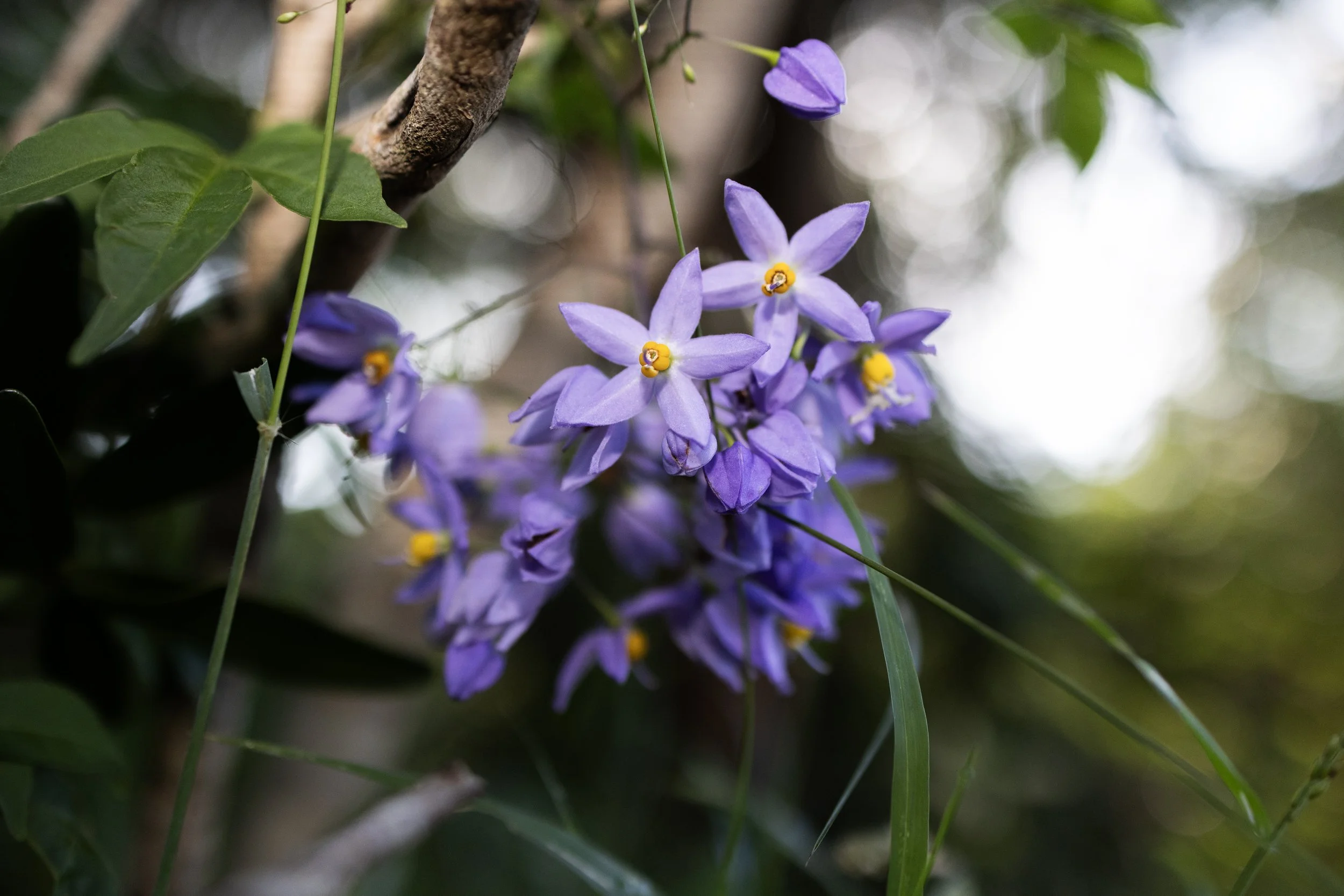
An up-close look at the Brazilian nightshade (Solanum seaforthianum). While its purple flowers may appear beautiful, this alien invasive plant spreads rapidly and can smother indigenous vegetation if left unmanaged.
WHY CLEARING MATTERS
This work is not about “tidying up” nature — it is about ecological correction.
If invasive and encroacher plants are left unmanaged, they can:
Suppress indigenous grasses and forbs
Reduce grazing availability for wildlife
Alter soil nutrient cycling
Decrease overall biodversity
By removing invasive species and carefully managing encroachers like sickle bush, restoration teams create space for native vegetation to recover naturally…allowing grasslands, woodlands, and forest systems to function as they should.
At the Greater Ukuwela Nature Reserve, land-management decisions are guided by 1940’s aerial photographs, which help determine what each area historically supproted: grassland, woodland, or forest. Restoration work aims to return each landscape to its appropriate ecological state — a cornerstone of Wild Tomorrow’s long-term conservation strategy.
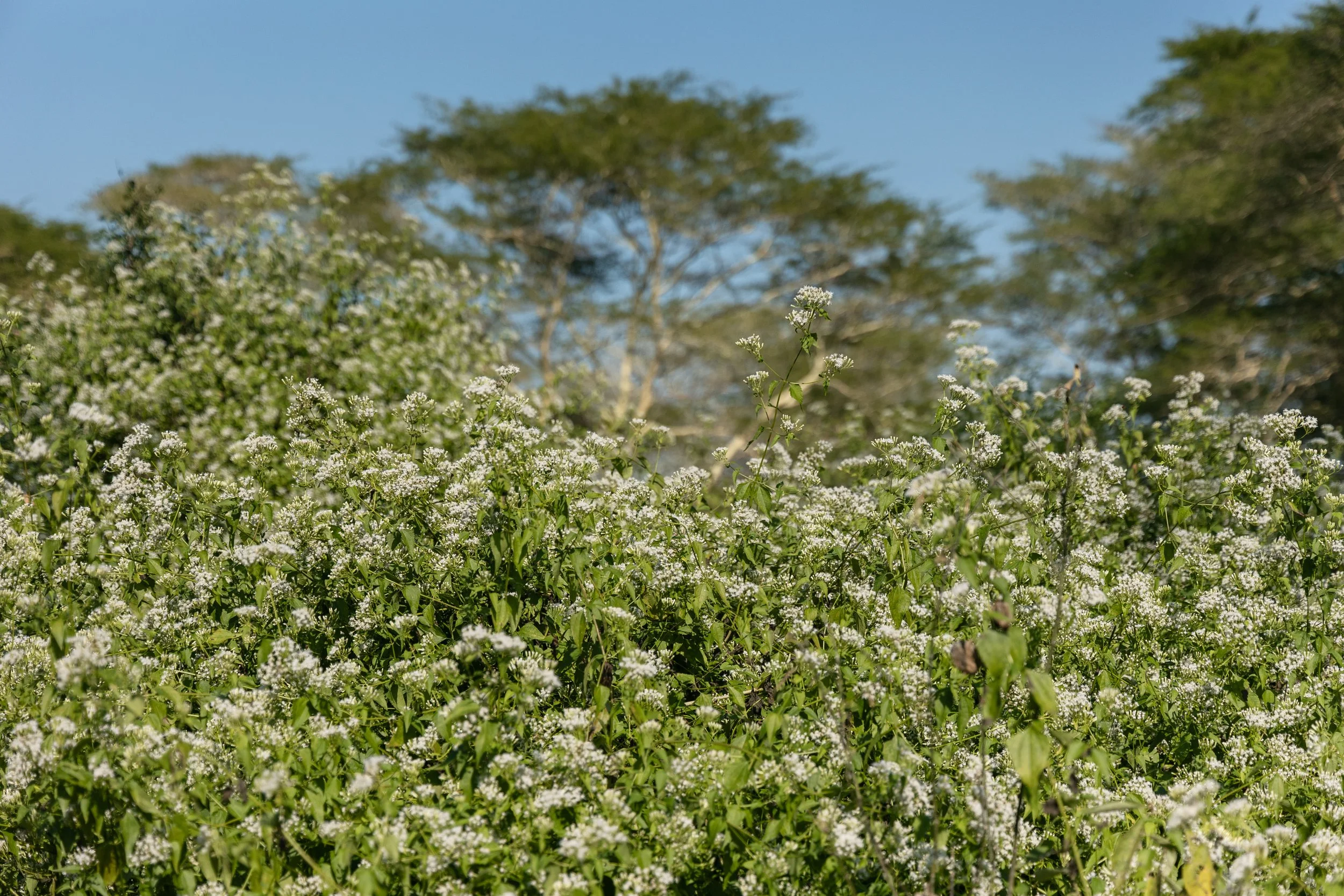
A close-up of Chromolaena (Chromolaena odorata), an invasive plant species that spreads rapidly and outcompetes indigenous vegetation if left unmanaged.
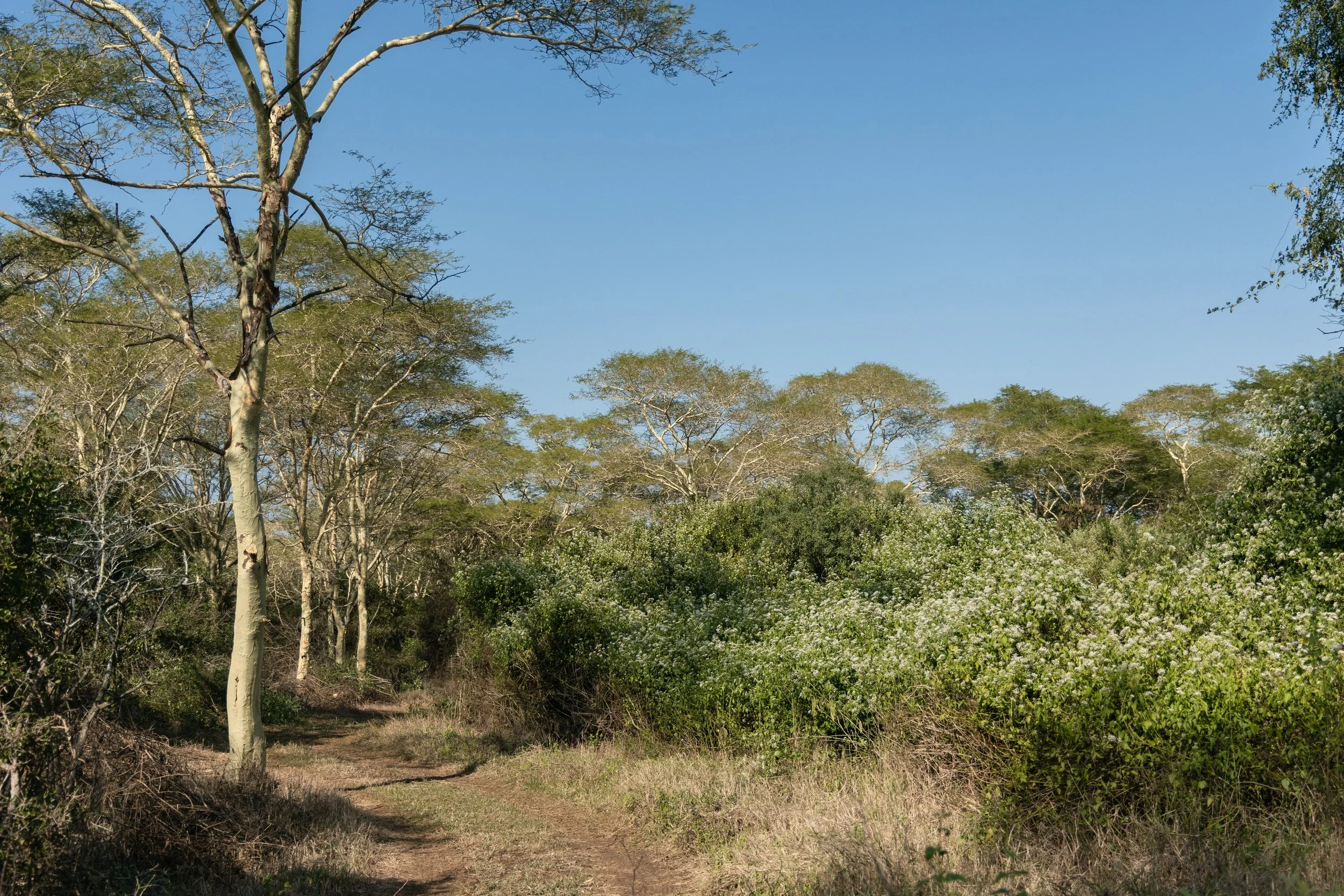
A broader view of the dense Chromolaena infestation along the fever-tree lined river at the Greater Ukuwela Nature Reserve, where unchecked spread can alter riverine habitat and suppress native plant communities.
VOLUNTEERS SUPPORTING RESTORATION IN THE FIELD
As part of our Conservation Experience Trips, volunteers have the opportunity to support guided field participation with the Green Mambas. During one or two focused field dates, volunteers are introduced to the fundamentals of habitat restoration, including plant identification, appropriate removal methods, and the ecological reasoning behind management decisions.
While the Green Mambas lead the technical and physically demanding aspects of the work, volunteers play a valuable supporting role. Even small areas cleared contribute meaningfully to improved habitat quality, increased access to grazing areas, and healthier ecological function across the reserve.
These experiences reflect an important part of Wild Tomorrow’s approach: conservation that builds understanding and connection. By pairing expert-led restoration with immersive learning opportunities, we create space for local women to lead long-term land recovery efforts…while giving volunteers a deeper, grounded appreciation for what effective, science-based conservation looks like in practice.
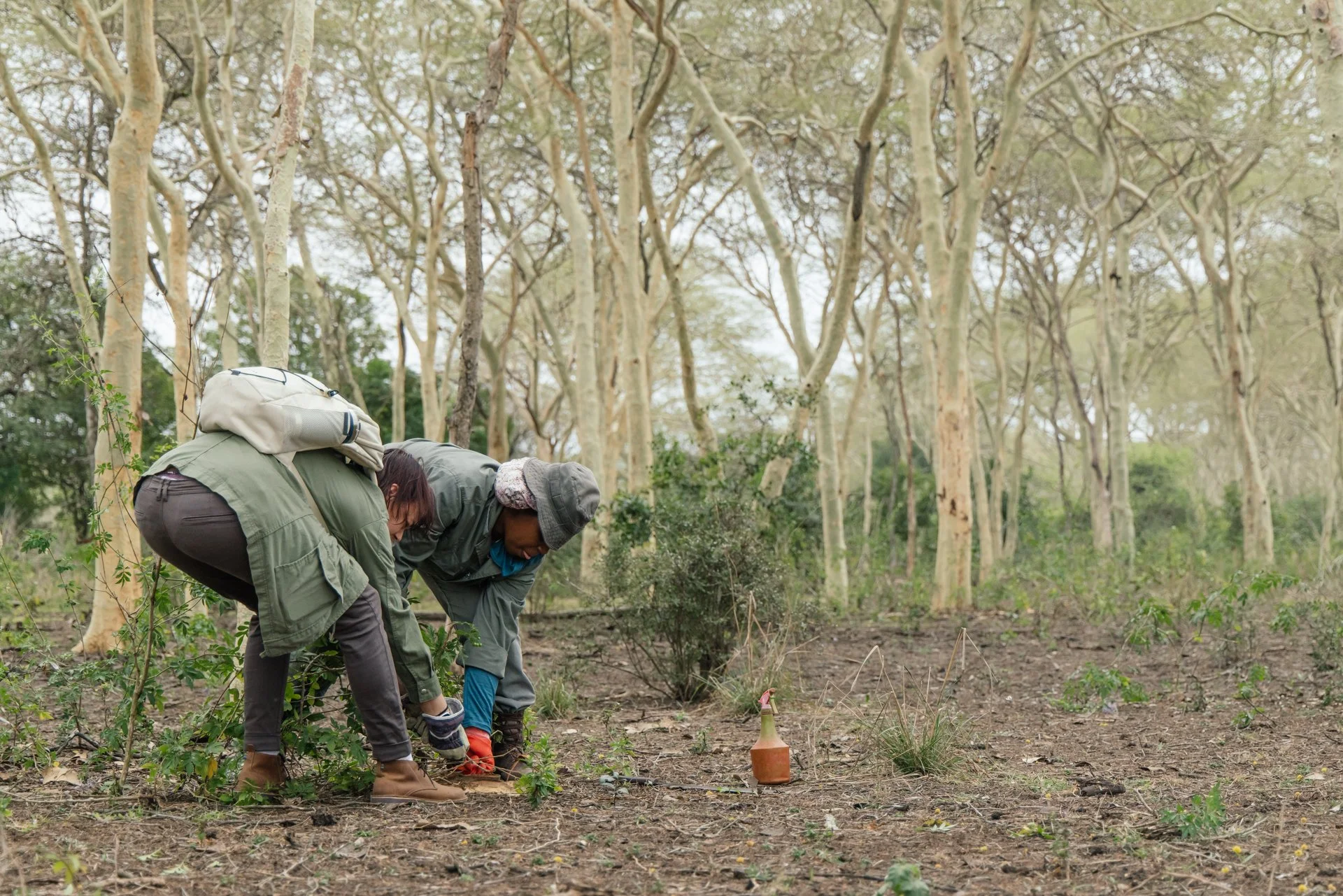
One of our Green Mambas working alongside a conservation experience volunteer to remove the invasive Brazilian nightshade (Solanum seaforthianum) from the fever tree forest at the Greater Ukuwela Nature Reserve.
FROM FIELD TO FOREST: RESTORATION AT A LANDSCAPE SCALE
The work taking place at the Greater Ukuwela Nature Reserve is part of a much bigger vision.
Through our Field to Forest land restoration campaign, Wild Tomorrow is actively transforming former farmland into functioning ecosystems…restoring natural vegetation, reconnecting wildlife corridors, and safeguarding biodiversity for the long term.
The Greater Ukuwela Nature Reserve forms a vital link within a broader conservation landscape, helping preserve safe movement routes for wildlife between protected areas. Invasive plant removal and bush encroachment management are among the first (and most essential) steps in making that connectivity possible.
WANT TO GET INVOLVED?
If you’re looking for a conservation experience that goes beyond observation…where you contribute directly to habitat recovery and learn from experts in the field…our Conservation Experience Trips offer exactly that!
THANK YOU FOR HELPING CLEAR THE WAY
To every volunteer who joined the Green Mambas in the field: THANK YOU! Your time, effort, and willingness to learn help support long-term habitat restoration and ecosystem recovery.
The areas cleared will now begin the slow, powerful process of regeneration…supporting wildlife, strengthening ecosystems, and helping ensure a truly wild tomorrow.