
FROM PIONEER TO THE NEXT GENERATION OF GIRAFFE RESEARCHERS
Every year on World Giraffe Day, we celebrate giraffe – particularly our own beautiful re-introduced population - while raising awareness of the challenges they face across Africa. This year, we are also celebrating remarkable women helping secure their future: from Anne Innis Dagg, whose pioneering work opened doors to giraffe understanding, to Masters students Scarlett Stromer and Simangele Myeni, whose research is carrying that legacy forward. Read more about their research studying the giraffe of Ukuwela in our latest blog below!
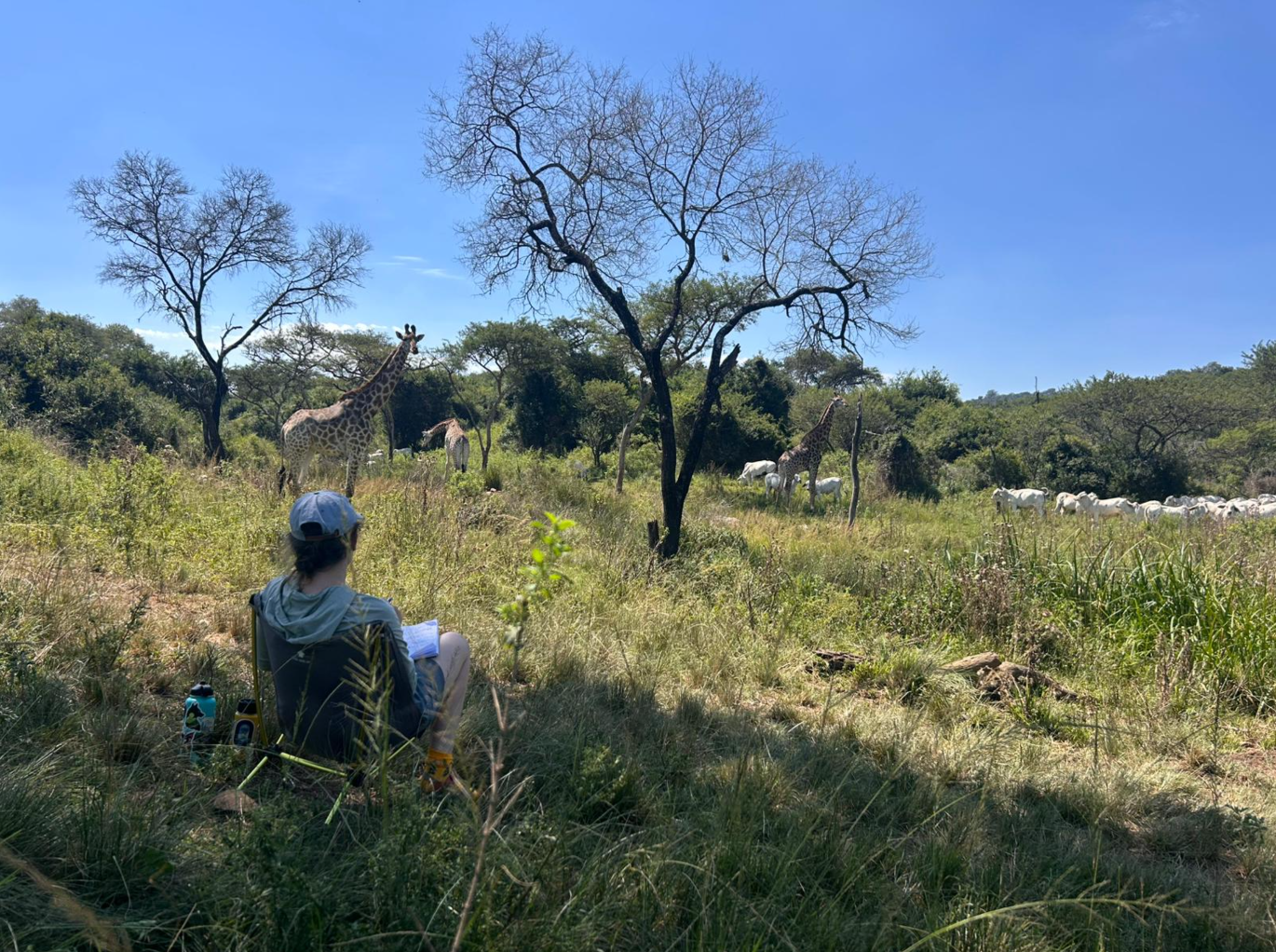
Scarlett Stromer, one of the giraffe researchers funded by the Anne Innis Dagg Foundation.
STANDING ON THE SHOLDERS OF A PIONEER
The Anne Innis Dagg Foundation honors the legacy of Dr. Anne Innis Dagg, a trailblazing Canadian zoologist who was the first scientist to study wild giraffe behavior – in other words, the world’s first “giraffologist”!
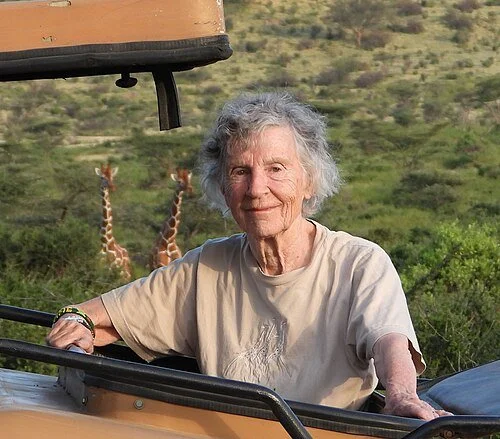
Anne in South Africa with her beloved giraffe in 2020.
In 1956, at a time when few women were able to pursue careers in science, Anne traveled alone from Canada to South Africa to study giraffes in the wild. Her groundbreaking observations transformed scientific understanding of giraffe behavior and social dynamics, and her determination helped pave the way for generations of women scientists. Wild Tomorrow was proud to honor Dr Anne Innis Dagg at our NYC Annual Gala in 2022.
Anne passed away in April 2024 at the age of 91. It is one of our greatest honors to have Dr Anne’s ashes spread at our reserve, honoring her wish to be laid to rest with wild giraffe in South Africa.
“My life-long passion has been always will be to help giraffes to survive and thrive in the wild. In order to achieve this, we must focus on conservation of their environment which is currently being compromised on many different levels. With giraffe numbers now in peril, we must act and act quickly.”
THE NEXT GENERATION OF GIRAFFE RESEARCH
At Wild Tomorrow, we are proud to partner with the Anne Innis Dagg Foundation to support the next generation of giraffe researchers and conservation leaders. Through this partnership, two remarkable young women - Scarlett Stromer (from California, United States) and Simangele Myeni (from KwaZulu-Natal, South Africa) - are pursuing their Master’s degrees focused on giraffe behavior, helping to deepen our understanding of these iconic animals while building critical conservation expertise in Africa.
Together, their research helps answer two critical questions: what giraffes eat and how they spend their time - information that directly informs habitat restoration, reserve management, and future giraffe conservation efforts.
Let’s learn more about them and their research topics!
Simangele: Exploring Giraffe Foraging Ecology
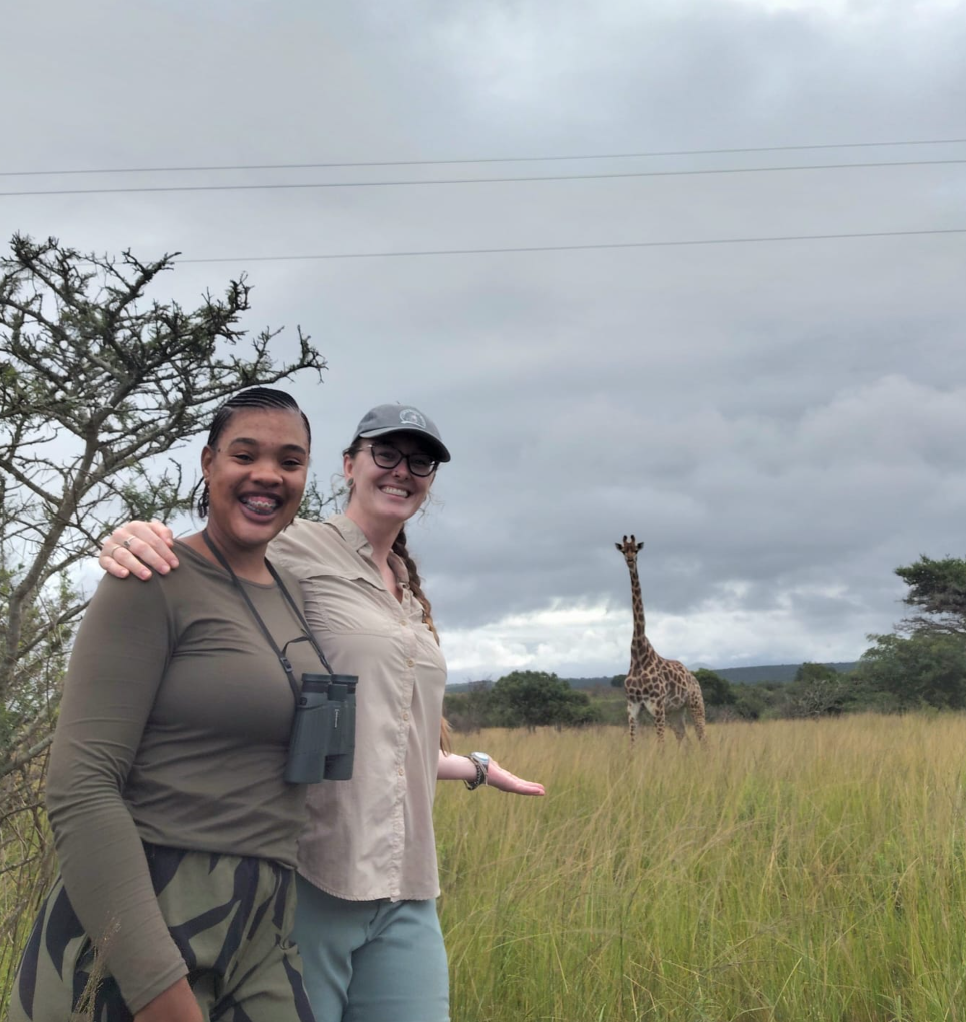
Simangele (left) and Scarlett (right) with a giraffe on Wild Tomorrow’s Greater Ukuwela Nature Reserve.
Simangele was born and raised in a rural town called Nongoma in KwaZulu-Natal, South Africa…just an hour's drive away from Wild Tomorrow’s reserve near Hluhluwe! She earned degrees in Environmental Science and Biological Sciences from the University of KwaZulu-Natal.
Simangele saw her first giraffe when she was 16 years old. Her uncle was still working for Ezemvelo KZN Wildlife, and took her on a game drive at Tembe Elephant Park during the holidays. Simangele says, “I was astonished. I’d never seen such a tall animal before. I left that game drive with so many questions, and that curiosity eventually led me to study giraffe.”
Fast forward to 2024, when Simangele saw the post about the Anne Innis Dagg research opportunity, which she said, felt like a dream come true. “I quickly applied with no hesitation, prayed, and hoped to be one of the chosen candidates. From the day I was accepted, I was overexcited. From then on, everything has been about giraffes, and I am very grateful for this opportunity to see them up close, study them, and be part of the team working to conserve them.”
Simangele’s Master’s research investigates the foraging ecology of Southern giraffes across three reserves in KwaZulu-Natal: Wild Tomorrow’s Greater Ukuwela Nature Reserve, Cumberland Nature Reserve, and Fountain Hill Estate.
Her research examines how giraffe diet selection varies between wet and dry seasons, across different habitats, and between male and female giraffes. She is also studying how vegetation characteristics influence feeding behavior and documenting the balance of native and invasive plant species within these reserves.
In addition to her fieldwork, Simangele is collecting plant specimens for the University of KwaZulu-Natal herbarium, helping build valuable botanical knowledge for future research. Her findings will contribute to evidence-based conservation management, informing habitat restoration efforts, reserve planning, and future giraffe translocations. For Wild Tomorrow, whose work includes restoring degraded habitat and reconnecting fragmented landscapes, understanding how giraffes use vegetation is critical to ensuring these ecosystems support healthy wildlife populations.
Scarlett: Investingating How Giraffes Spend their Time
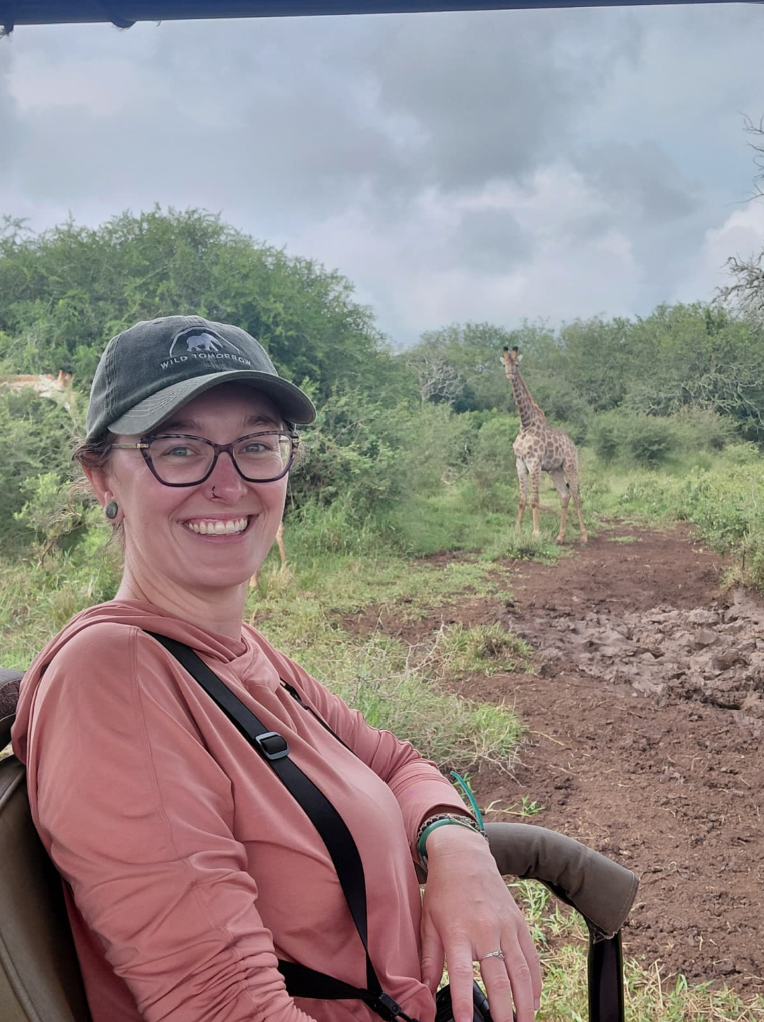
Scarlett…in her Wild Tomorrow cap!
As a child, Scarlett – born and raised in Redding, California - was always a big animal lover and knew she wanted to work with animals when she grew up. Her favorite movie was the Lion King, and she has been drawn to giraffe as her favourite animal for as long as she can remember. “Once I learned about the career of a wildlife biologist and that giraffe population numbers in Africa were plummeting at a drastic rate, it only fueled my passion for giraffe conservation even more” says Scarlett. “It only made sense to me that I would one day study and help conserve giraffe in Africa!”.
Scarlett’s research focuses on the activity budgets of Southern giraffes living in Greater Ukuwela, Cumberland, and Fountain Hill nature reserves.
She is examining how giraffes allocate their time among key activities such as foraging, moving, resting, ruminating, drinking, and remaining vigilant. By comparing these behaviors across seasons, temperature fluctuations, and different reserve environments, Scarlett is helping reveal how giraffes adapt to changing conditions.
Her research also explores the role of social dynamics, including age, sex, and herd composition, in shaping giraffe behavior.
Understanding these patterns provides valuable insights into habitat use, animal welfare, and conservation management. It helps conservationists better understand what giraffes need to thrive and how reserve managers can support healthy populations in a changing world.
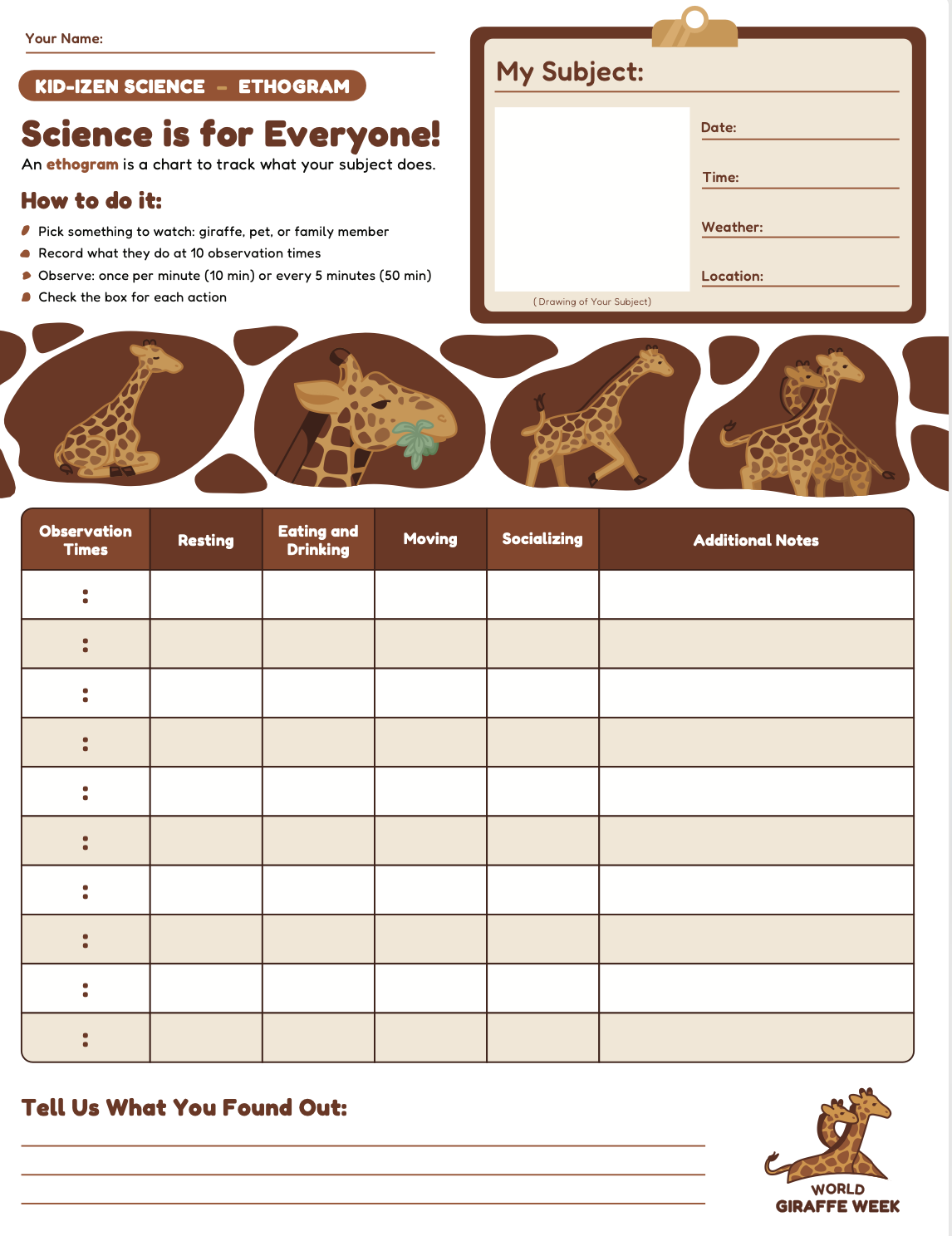
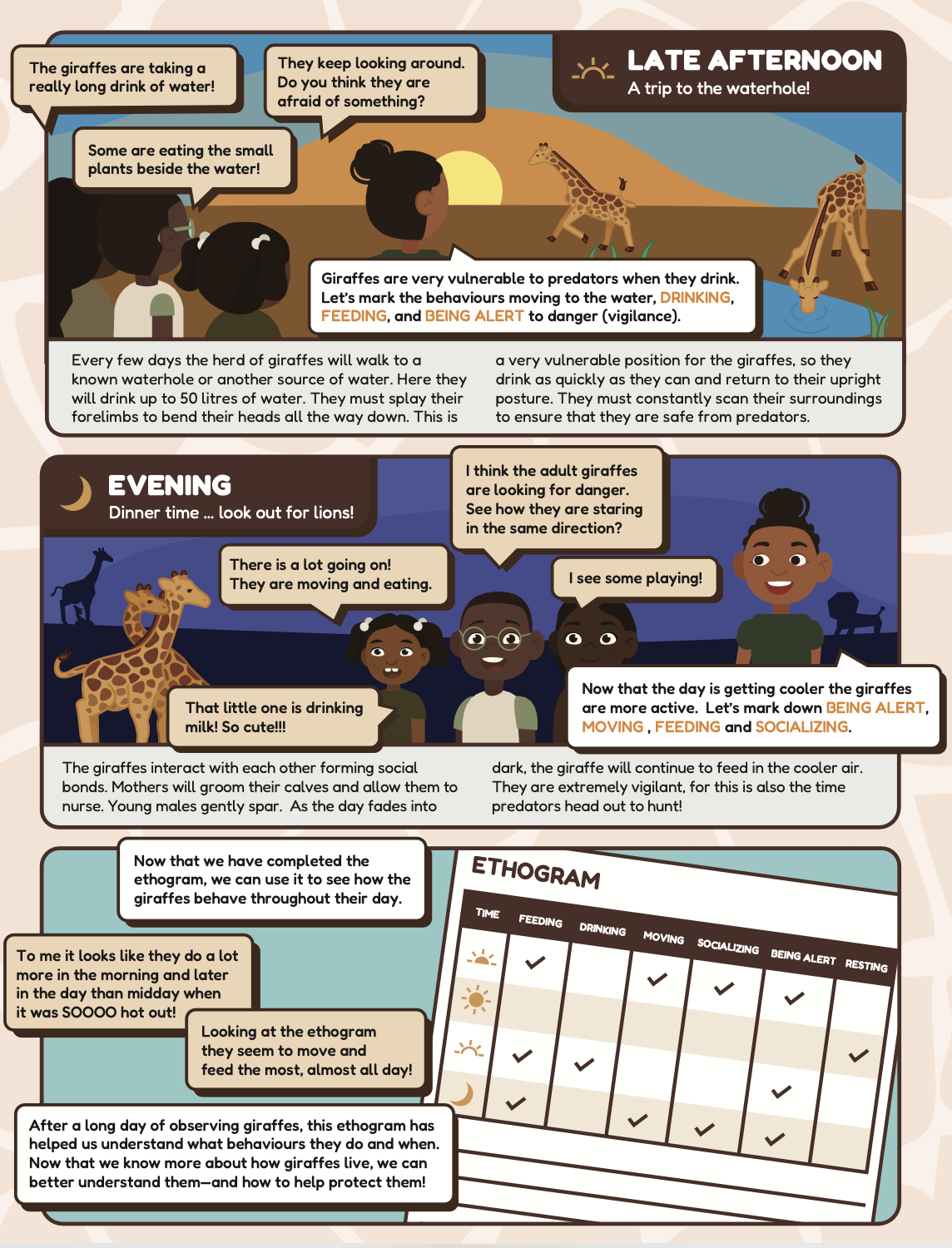
Recently, for World Giraffe Day, Scarlett, together with Mary Dagg and the Anne Innis Dagg team created a basic ‘Ethogram’ activity, which is a standardized inventory of the behaviors on an animal whose behavior is being studied, used to systematically observe and record behavior. These standardized behavior definitions allow different researchers to consistently document what giraffes are doing and compare results across individuals, populations, and locations. We can’t wait for kids to try being a giraffe behavior scientist for the day, by observing our giraffe and filling in their ethograms!
WHAT MAKES UKUWELA AN INTERESTING WILD SPACE TO STUDY GIRAFFE?
While their research spans three reserves, Greater Ukuwela offers a particularly fascinating landscape to study giraffe. We asked Scarlett and Simangele what makes it so special.
“At Ukuwela, the habitat is botanically more diverse than our other study sites, and it is fascinating to see how the giraffe uses the landscape as the seasons change. In December and April, there was a big baby boom, so it was very special to see all the little ones together, running and chasing one another as they got older. Lastly, it is always very touching to see the giraffe visit Anne’s memorial site. It’s incredibly special when they are feeding and resting near her site, as I know that is everything she could have wanted. We say hello to her every time we come and go.”
“There are lots of things that are fascinating about these tall giants. My highlight of giraffes at the Greater Ukuwela Nature Reserve is observing curious calves. We had the “baby season” in the wet season, and it was so fun to watch them play around and sniff plants, wildflowers, and grasses. It always feels surreal to watch them make foraging decisions in real time. It has given me a much deeper appreciation of how complex and selective giraffes are as browsers. Overall, Ukuwela provides a valuable environment for examining diet selection, seasonal changes in browse use, and giraffe interactions with available vegetation.”
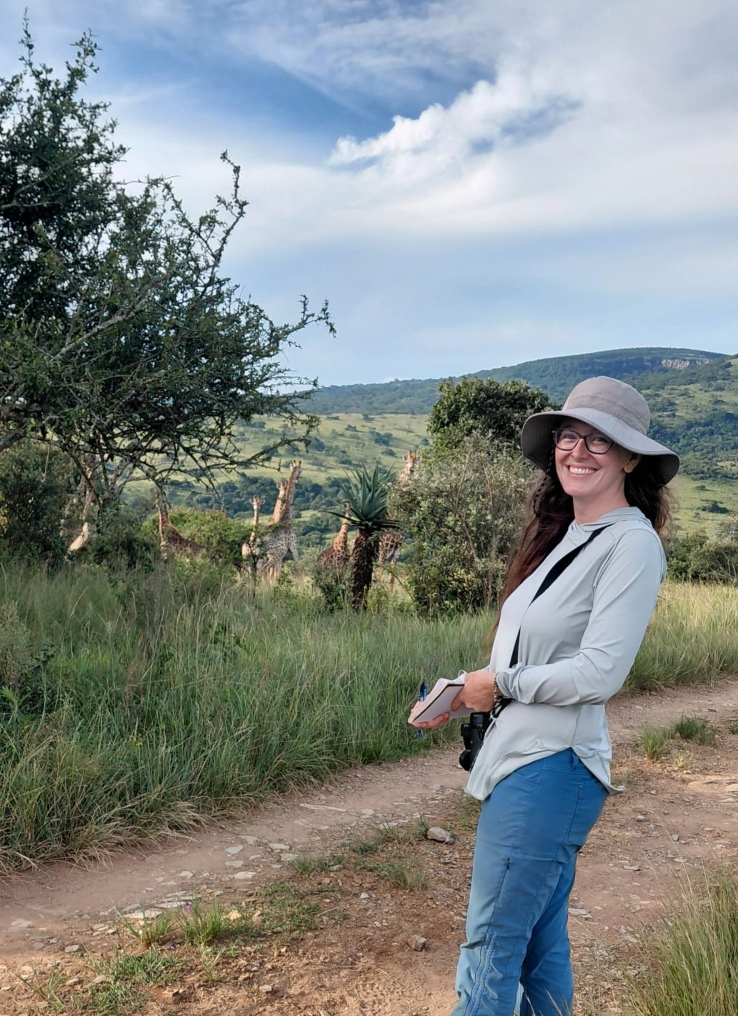
Scarlett observing the Giraffe of Ukuwela!
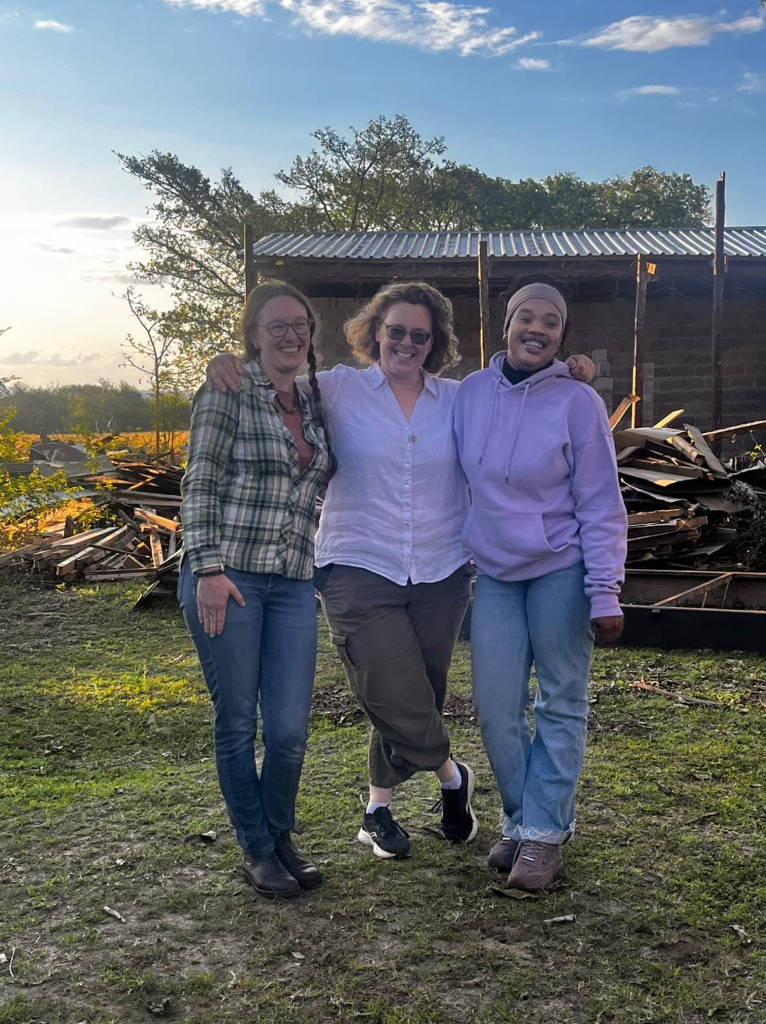
Scarlett, Mary Dagg and Simangele together in South Africa.
A SHARED VISION FOR A WILDER TOMORROW
At Wild Tomorrow, we believe conservation succeeds when it empowers people alongside wildlife. As habitat loss, human-wildlife conflict, and other pressures continue to threaten giraffe populations, scientific research is more important than ever. “I believe new insights and understanding of giraffe and their behaviors, social world and bonds, will build empathy and compassion for this under-researched and less-understood species”, said Wendy Hapgood, self-professed giraffe lover and co-founder of Wild Tomorrow, “Equally important is ensuring that talented young researchers, especially women who are under-represented in conservation, have the opportunity to build careers and lead efforts to protect Africa’s wildlife. By supporting emerging researchers like Scarlett and Simangele, we are investing not only in new scientific understanding but also investing in the future of giraffe conservation. Thank you to the Anne Innis Dagg Foundation for creating this opportunity”.
Scarlett and Simangele’s work reminds us that conservation is not only about protecting species. It is about nurturing curiosity, creating opportunity, and inspiring the next generation of leaders who will help build a wilder tomorrow for giraffe and all species who share their wild spaces.
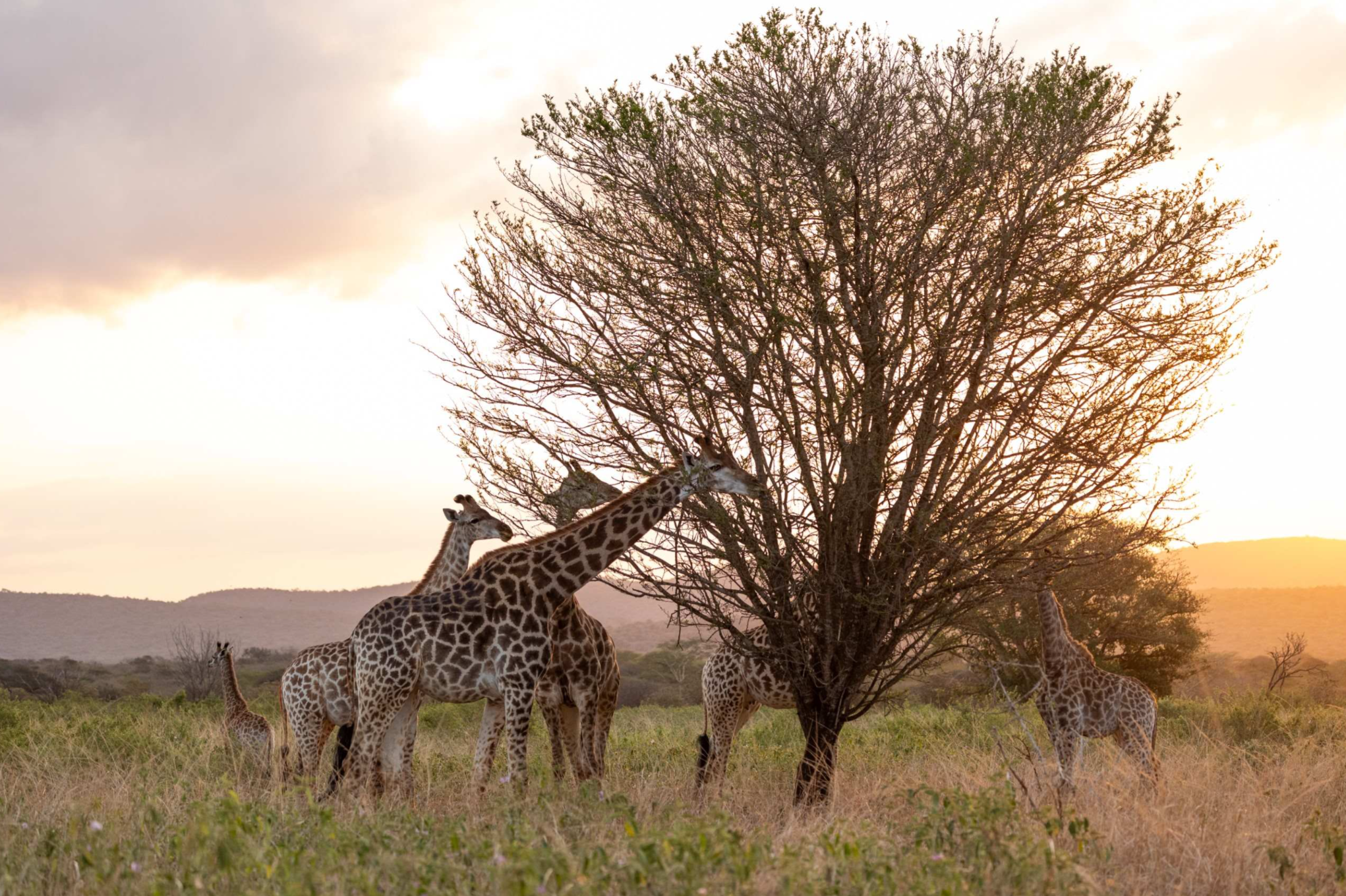
A tower of giraffe, photographed on Wild Tomorrow’s Greater Ukuwela Nature Reserve by Wildlife Storyteller Chantelle Melzer.
The future of giraffe conservation depends on the next generation of scientists.
To help make that future possible, Wild Tomorrow is transforming an old farmhouse into a dedicated field research station at our Conservation Center at the Greater Ukuwela Nature Reserve in KwaZulu-Natal South Africa. This facility will provide a permanent base for students and researchers conducting critical wildlife research in one of the world's most important biodiversity hotspots.
Your support can help create the same kind of opportunity that launched Anne Innis Dagg's groundbreaking work—and that today is helping young scientists like Scarlett and Simangele turn their passion into conservation action.