
EVALUATING STATUS OF KWAZULU-NATAL’S RHINOS AFTER CRITICAL INTERVENTIONS
Two years after Hluhluwe-iMfolozi Park began one of the most ambitious rhino dehorning programmes in South Africa, the results are giving us something we haven’t had enough of in the fight against rhino poaching: hope. Read more in our latest blog post below about the decline in rhino poaching mortalities across Hluhluwe-iMfolozi Park and KwaZulu-Natal, the interventions helping to turn the tide, and why this encouraging progress offers renewed hope for the future of our province’s rhinos.
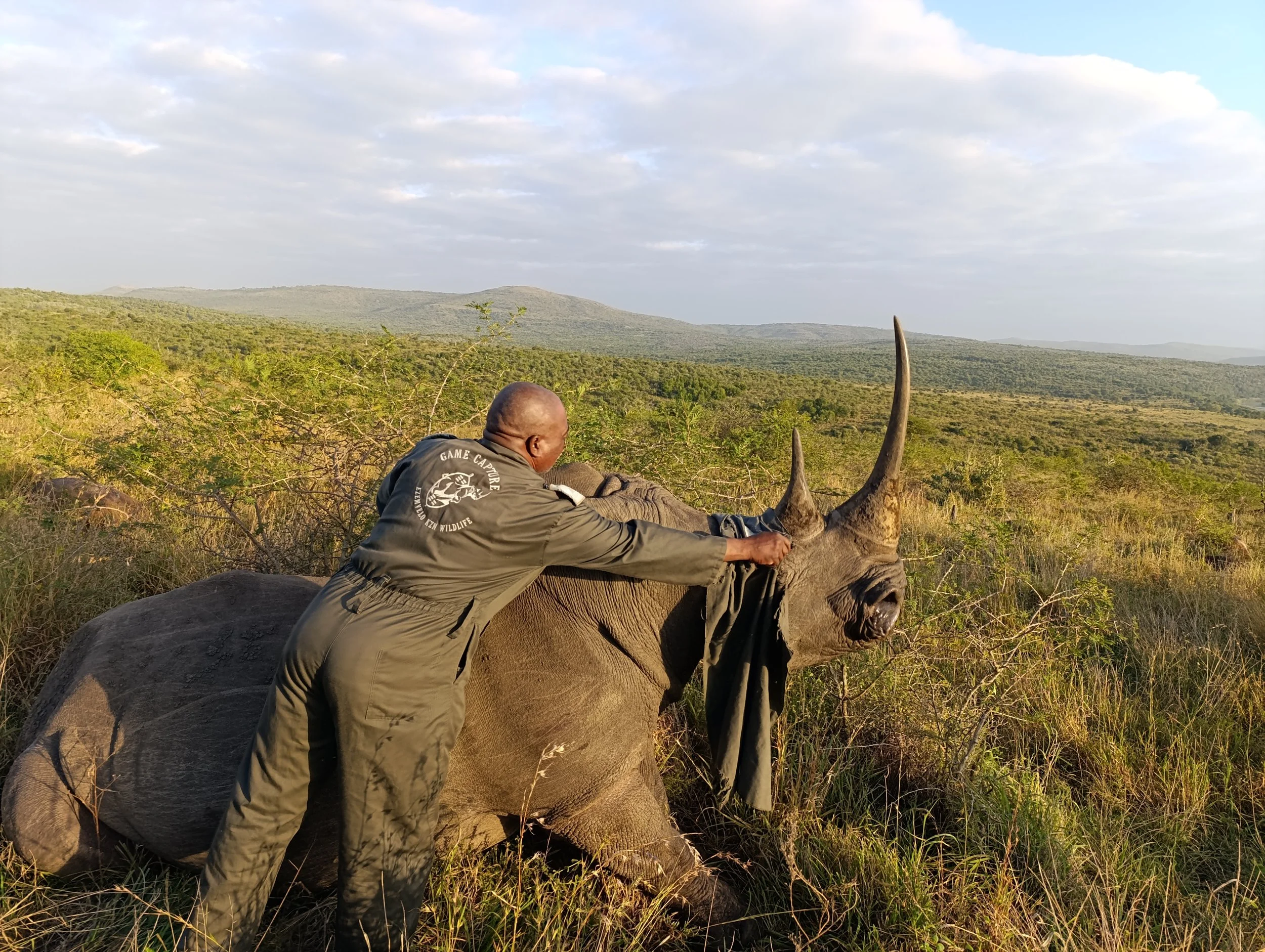
A majestic white rhino before getting its horn removed as part of the ongoing Hluhluwe-iMfolozi Park dehorning programme. Photo credit: Ezemvelo KZN Wildlife.
For years, KwaZulu-Natal has stood at the epicenter of South Africa’s rhino poaching crisis. In 2023, our province lost a devastating 325 rhinos to poaching – more than any other province in the country. Of those, 307 were killed within Hluhluwe-iMfolozi Park alone. But the story since then looks dramatically different.
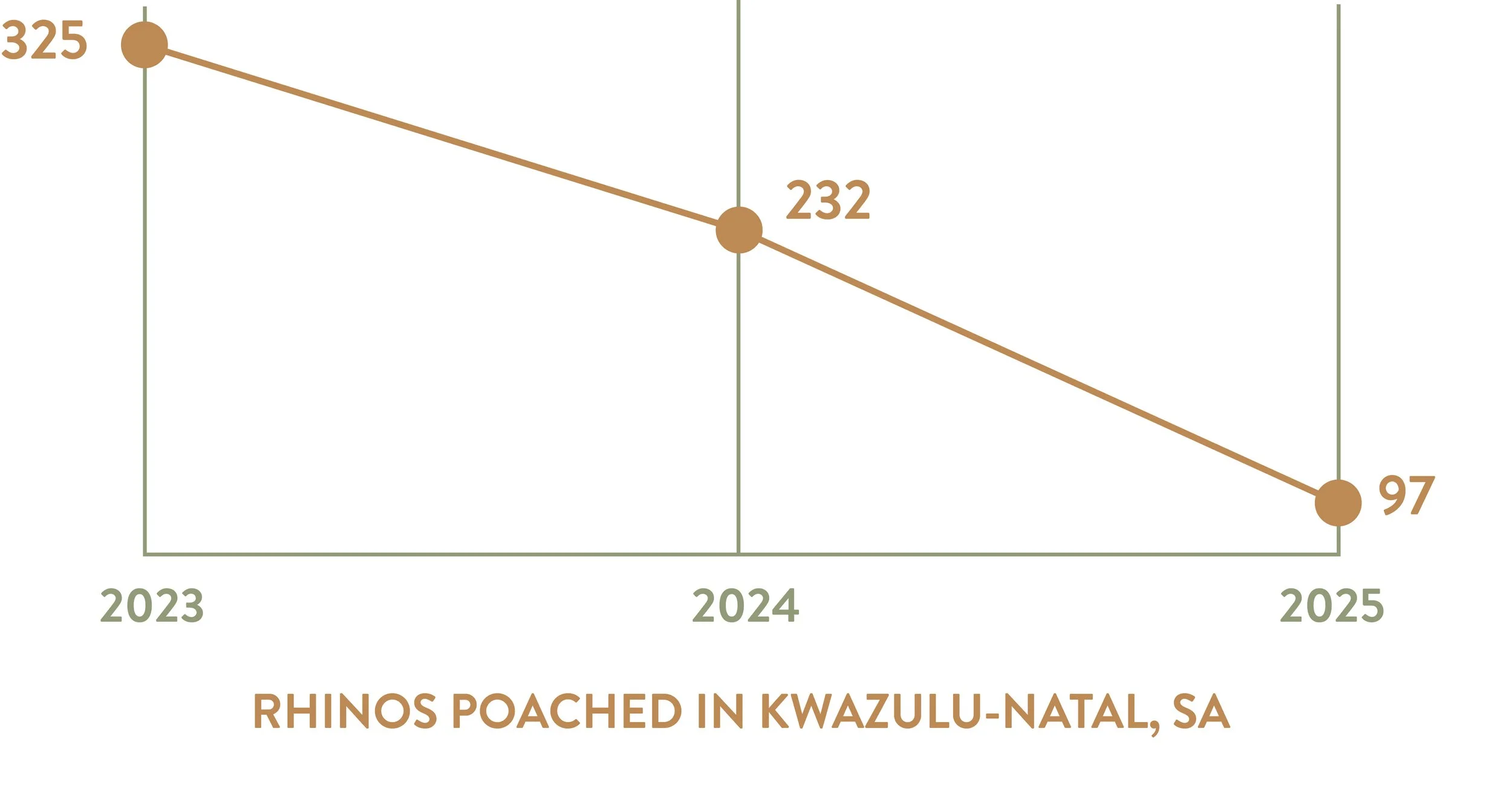
In April 2024, Ezemvelo KZN Wildlife began a strategic programme to dehorn all the rhinos of Hluhluwe-iMfolozi Park. By the end of that year, rhino poaching across KwaZulu-Natal had fallen to 232 animals. Then came 2025 – just 97 rhinos were poached across KwaZulu-Natal, a decline of approximately 70% from the 325 lost only two years earlier.
At Hluhluwe-iMfolozi Park, the turnaround was even more striking: rhino poaching fell from 198 animals in 2024 to just 63 in 2025…a 68% reduction in a single year!
And the encouraging trend has continued into 2026. During the first five months of this year, the park recorded a further 52% reduction in rhino poaching mortalities compared with the same period in 2025. For a landscape that has endured years of relentless losses, these numbers represent an extraordinary change in direction.
So, what changed? There is no single answer…but one of the most significant interventions was the launch of Hluhluwe-iMfolozi Park’s strategic dehorning programme which started in April 2024.
DEHORNING: REMOVING THE REWARD
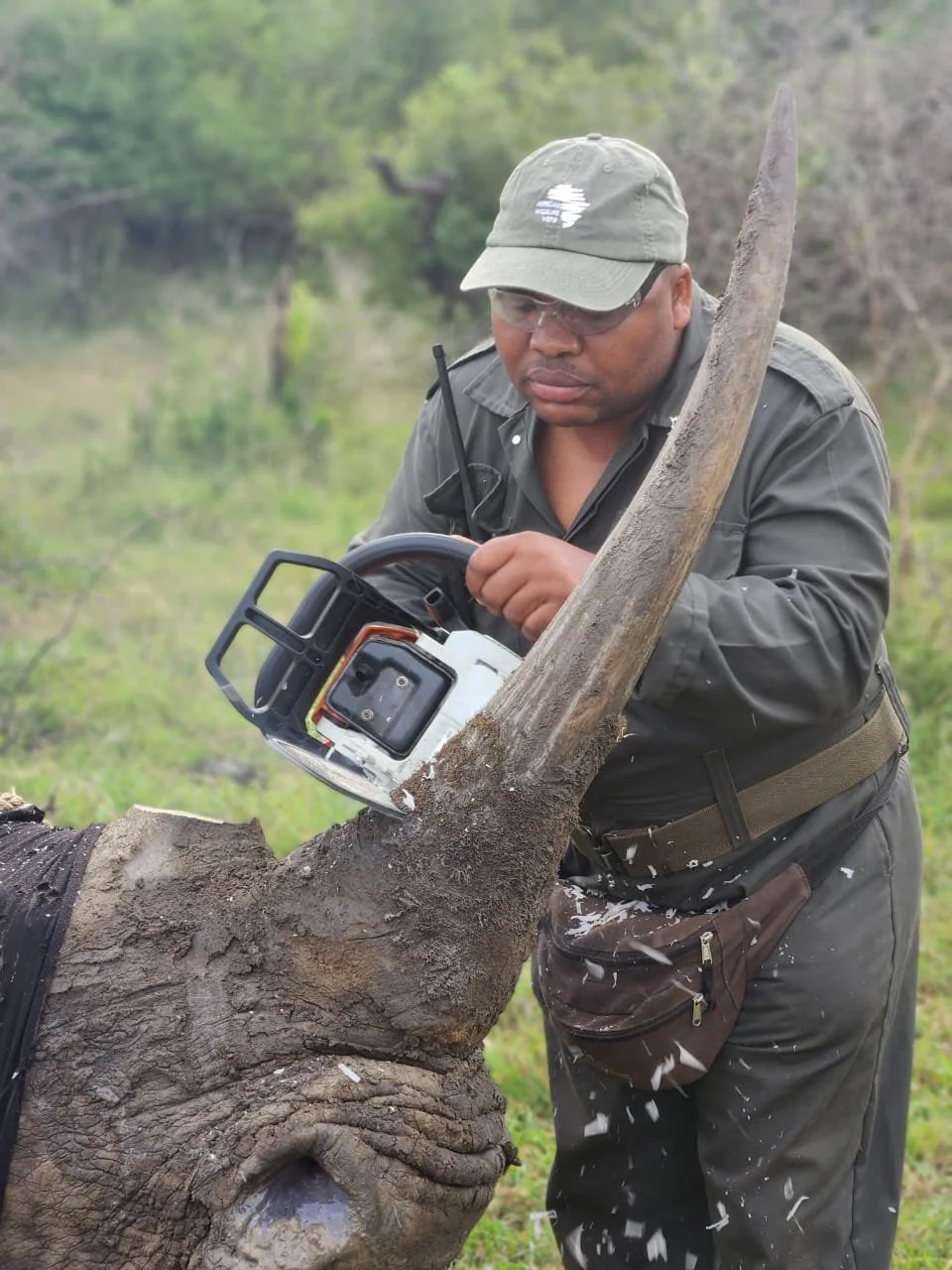
Dumisane Zwane assisting with the dehorning of a white rhino at Hluhluwe-Imfolozi Park in 2024. Photo credit: Ezemvelo KZN Wildlife.
In line with Ezemvelo’s dehorning policy, a resolution was taken by Ezemvelo that the Hluhluwe-iMfolozi rhino herd would be dehorned and maintained as a dehorned herd until Ezemvelo is confident that this intervention is no longer necessary. In April 2024, Ezemvelo KZN Wildlife began strategically dehorning rhinos across Hluhluwe-iMfolozi Park.
The principle behind dehorning is relatively simple: rhinos are killed because of the extraordinarily high value placed on their horns by illegal wildlife trafficking networks. Safely removing the majority of the horn dramatically reduces the potential reward for a poacher while leaving the rhino alive. Ezemvelo clearly understands that dehorned rhinos remain vulnerable to poachers, so it was critical that all other counter-poaching interventions remained in place and, in fact, were strengthened to help prevent poaching attempts.
Rhino horn is made primarily of keratin – the same protein found in human fingernails – and, when performed correctly by experienced wildlife veterinarians, the horn can be trimmed without cutting into living tissue. Importantly, the horn grows back, which means dehorning is not a once-off solution. At Hluhluwe-iMfolozi Park, maintenance dehorning is now conducted annually to maintain the dehorned status of the population.
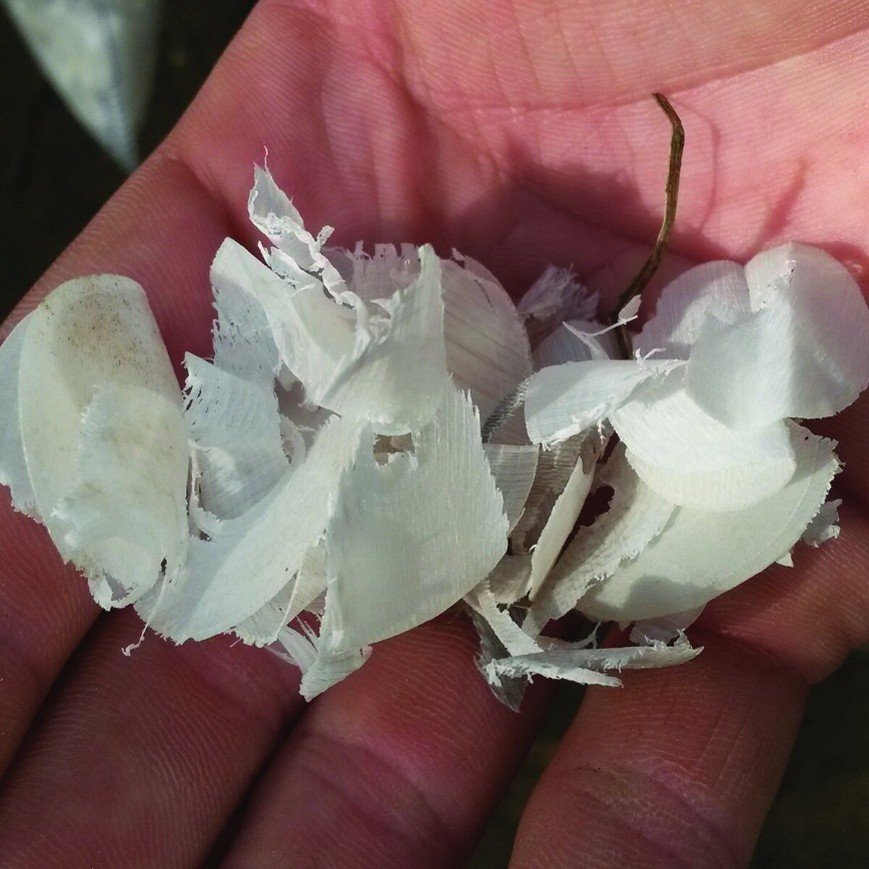
Keratin shavings from a rhino horn – made of the same substance as a human fingernail. Photo credit: Wild Tomorrow.
For many years, conservationists debated just how effective this highly invasive intervention could be, as the annual cost is significant and the impacts on animal behavior were not clearly understood. The decision therefore included both a continued dehorning programme and research into the impact of dehorning on rhino behavior. Through this ongoing research, Ezemvelo is gaining a better understanding of the intervention and its sustainable implementation.
A landmark study published in Science in 2025 analyzed seven years of data from 11 reserves in the Greater Kruger landscape. Researchers examined the effectiveness of multiple anti-poaching interventions across reserves protecting approximately a quarter of Africa’s remaining rhinos.
Across eight reserves, 2,284 rhinos were dehorned. The result? Researchers found that dehorning was associated with an approximately 78% reduction in rhino poaching – while accounting for just 1.2% of the total rhino protection budget studied.
While the study did not include Hluhluwe-iMfolozi Park, its findings provide compelling scientific evidence that reducing the reward available to poachers through dehorning can dramatically reduce poaching pressure. But there is an important caveat:
THERE IS NO SINGLE SOLUTION TO RHINO POACHING
Ezemvelo understands the potential for poaching pressure to be displaced rather than eliminated, hence the strategic decision not to veer away from KwaZulu-Natal’s broader counter-poaching interventions. While dehorning is one important tool, it is critical that these other interventions remain resilient and continue to improve, combining trusted law-enforcement methods with new technologies.
Ezemvelo itself has been careful not to attribute Hluhluwe-iMfolozi Park’s recent success to dehorning alone. The organisation describes the dehorning programme as a “critical catalyst” that helped stabilize poaching pressure and gave conservation teams the opportunity to implement additional targeted interventions.
According to South Africa’s Department of Forestry, Fisheries, and the Environment (DFFE), analysis of Hluhluwe-iMfolozi Park’s 2025 results confirmed that multiple complementary interventions were central to the reduction in poaching. These included enhanced detection and early-warning capabilities through advanced camera technologies and sensors, as well as Ezemvelo’s Integrity Implementation Plan, which included polygraphing of park law-enforcement personnel.
DFFE also highlighted closer collaboration between Ezemvelo and KwaZulu-Natal’s rhino owners through the Integrated Wildlife Zones (IWZ) Programme, alongside sustained support from conservation partners. Together, these measures create layers of protection around a rhino population.
And the pressure has certainly not disappeared: Between January and May 2026, almost 100 incidents involving suspected poacher activity, sightings, incursions and reports of gunshots were recorded at Hluhluwe-iMfolozi Park.
The threat remains very real. What has changed is the ability to respond to it.
A PARK WITH AN EXTRAORDINARY RHINO LEGACY
The importance of protecting Hluhluwe-iMfolozi Park’s rhinos extends far beyond the boundaries of KwaZulu-Natal.
This park holds a special place in the global history of rhino conservation. In the early twentieth century, the southern white rhino had been pushed to the brink of extinction, with only a small population surviving in what is today Hluhluwe-iMfolozi Park.
Through determined protection and the pioneering translocation programme known as Operation Rhino, animals from this surviving population helped re-establish white rhinos in protected areas throughout southern Africa and beyond.
In many ways, rhinos around the world owe their survival to this landscape. That makes the poaching crisis of the past several years particularly heartbreaking…but it also makes today’s progress especially meaningful. Once again, Hluhluwe-iMfolozi Park is showing what determined rhino conservation can achieve.
PROTECTING RHINOS TAKES AN ECOSYSTEM OF PEOPLE
A conservation achievement of this scale is never the work of one organisation.
The dehorning of such a large rhino population requires an extraordinary amount of funding, veterinary expertise, personnel, equipment and coordination. Since the programme began in 2024, Ezemvelo KZN Wildlife has worked alongside a network of conservation organizations and donors to make both the initial operation and subsequent maintenance dehorning possible.
The initial dehorning programme was funded by WWF South Africa, with Ezemvelo KZN Wildlife working alongside a wider network of conservation partners providing funding, veterinary expertise, monitoring, research and operational support, including; African Wildlife Vets, Wild Wonderful World, Wildlife ACT, WWF Black Rhino Range Expansion Project, and Black Rhino Ecology Project. This kind of collaboration is exactly what rhino conservation requires.


Through campaigns and conservation efforts including World Ranger Day, Paws Against Poaching, and Wildlife Crime Scene Investigative Techniques training, Wild Tomorrow supports rhino conservation across KwaZulu-Natal by helping equip frontline rangers, supporting specialist K9 units, strengthening wildlife crime investigation skills, and contributing to research, monitoring and tracking.
Wild Tomorrow’s most fundamental conservation mission remains protecting and restoring the habitat that rhinos and other threatened wildlife need to survive. As Hluhluwe-iMfolozi Park’s dehorning programme continues, we also intend to contribute directly to future operations, adding another layer to our ongoing commitment to rhino conservation in KwaZulu-Natal.
HOPE…WITH CAUTION
World Rhino Day is an opportunity to celebrate one of our planet’s most extraordinary animals. For many years, however, it has also been a day when conservation organizations have had to share increasingly devastating statistics.
This year, here in KwaZulu-Natal, we have reason to tell a different story. From 325 rhinos poached across the province in 2023 to 97 in 2025. And during the first five months of 2026, another 52% reduction compared with the same period last year.
These numbers do not mean the fight is over. Rhino horn remains immensely valuable on the illegal market. Criminal syndicates remain active. Rangers continue to face dangerous incursions. And dehorning itself is an intervention that no conservationist wishes were necessary.
But these numbers show us something incredibly important: conservation interventions can work.
When brave rangers, conservation managers, scientists, veterinarians, law-enforcement agencies, communities, government authorities, NGOs and supporters work together – and when conservation decisions are guided by evidence – it is possible to change the trajectory.
Two years ago, Hluhluwe-iMfolozi Park made the enormous decision to remove the horns of its rhinos to help save their lives.
Today, the dramatic decline in poaching means many more of Hluhluwe-iMfolozi Park’s rhinos have been given the chance to remain where they belong: alive and wild. That progress is the result of an extraordinary conservation community continuing to work together to protect them. This World Rhino Day, that is something worth celebrating!
If you feel inclined to donate to Wild Tomorrow’s Rhino Protection Program, and the Hluhluwe-iMfolozi Park dehorning operation, you can do so here.
A note from Wild Tomorrow: Wild Tomorrow has not contributed funding directly to Hluhluwe-iMfolozi Park's dehorning operations to date. We are incredibly grateful to the organizations and donors whose support has made this vital work possible, including WWF South Africa, African Wildlife Vets, Wild Wonderful World, Wildlife ACT, WWF South Africa’s Black Rhino Range Expansion Project and Black Rhino Ecology Project, alongside Ezemvelo KZN Wildlife and the many veterinary, research and operational teams involved.
Looking ahead, Wild Tomorrow intends to support future dehorning operations at Hluhluwe-iMfolozi Park as part of our broader commitment to rhino conservation in KwaZulu-Natal. We look forward to joining this collaborative effort and helping ensure this critically important rhino population continues to receive the protection it needs.
REFERENCES & FURTHER READING
Department of Forestry, Fisheries and the Environment (2026) – 16% decline in rhino poaching shows the impact of anti-poaching and anti-trafficking efforts.
Ezemvelo KZN Wildlife (2026).
IOL (2026) - Significant decline in rhino poaching at Hluhluwe-iMfolozi Park amid security challenges.
Zululand Observer (2026) - Rhino poaching declines at Hluhluwe-iMfolozi Park.
Kuiper, T. et al., Science (2025) – Dehorning reduces rhino poaching.
WWF (2024) – Dehorning yields results.
Wildlife ACT (2024) – Positive step for rhino conservation as Hluhluwe-iMfolozi Park undertakes dehorning operation.
MORE FROM WILD TOMORROW