WHAT IT TAKES TO BECOME A CONSERVATION K9
Behind every conservation K9 working alongside rangers in the field are months of training, patience and partnership. Long before these dogs are ready to track a human scent through the bush, their training begins with something much simpler: play, curiosity and learning to follow their noses.
At Hluhluwe-iMfolozi Park, a new generation of conservation K9s are beginning that journey. From their earliest scent exercises to building a relationship with their future handlers, each lesson is laying the foundation for the important work they may one day do protecting wildlife.
Wild Tomorrow is proud to sponsor the training and purchase of the newest (and dare we say cutest) K9 pup, Thunzi. Read about the training journey ahead for Thunzi in our latest blog below.
MEET THE NEXT GENERATION OF ANTI-POACHING K9s
A puppy running through the grass. A nose to the ground. A sudden change in direction as a scent catches their attention. To most people, it looks like play. But for a conservation K9 like Thunzi, newly arrived at her new home at Hluhluwe-iMfolozi Park in South Africa, this is where her career begins.
Becoming a working conservation dog takes months of training, patience and repetition. Long before a dog is ready to work alongside a ranger in the field, they must first learn the foundations that will eventually allow them to use their extraordinary sense of smell in a controlled and purposeful way.
IT STARTS WITH A PUPPY
The first stage of training is about building confidence and curiosity.
A young dog needs to learn about the world around them — different environments, surfaces, sounds, people and situations. They need to become comfortable exploring and, importantly, develop the confidence to investigate what is unfamiliar. Training is introduced gradually through positive reinforcement, turning a dog's natural desire to explore and search into a skill. At this stage, a puppy is not tracking a poacher. They are learning how to search. They are learning that finding a particular scent leads to a reward. And they are learning that working with their ranger handler can be exciting and rewarding. Those simple lessons form the foundation for everything that comes later.
FOLLOWING THE NOSE
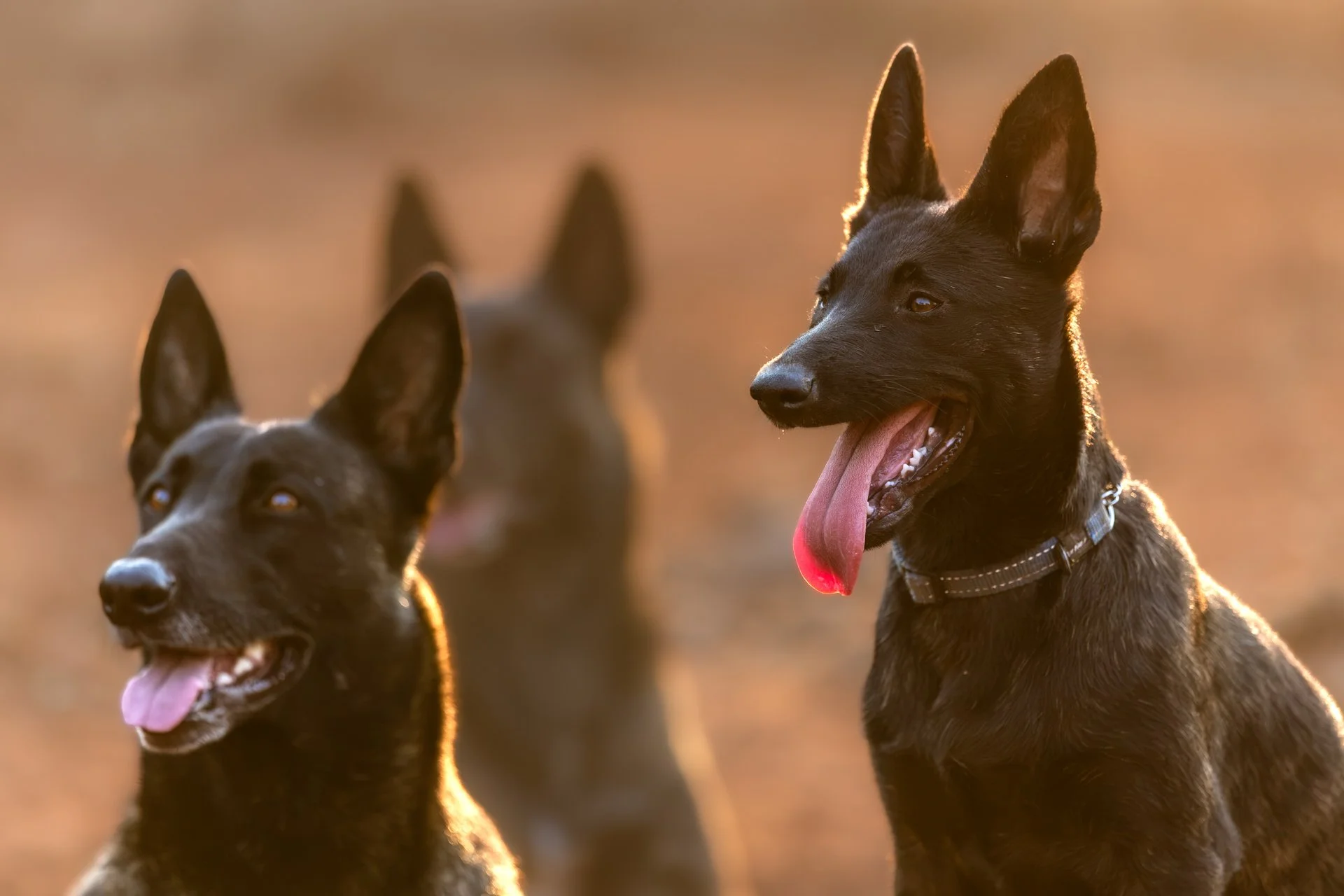
A dog's greatest asset in conservation work is something humans simply cannot replicate: their sense of smell.
Dogs have an extraordinary number of olfactory receptors and can detect scents at concentrations far below what humans are capable of detecting. Depending on their training and individual abilities, conservation K9s can eventually learn to follow human scent trails, detect wildlife products and locate other items associated with wildlife crime.
But having an exceptional nose is only the beginning.
The dog must learn how to use it.
Training teaches the K9 to focus on a particular scent, follow it through different environments and continue searching even when the trail becomes difficult.
What starts as a puppy following a simple scent trail can eventually develop into the ability to follow a human trail across the African bush.
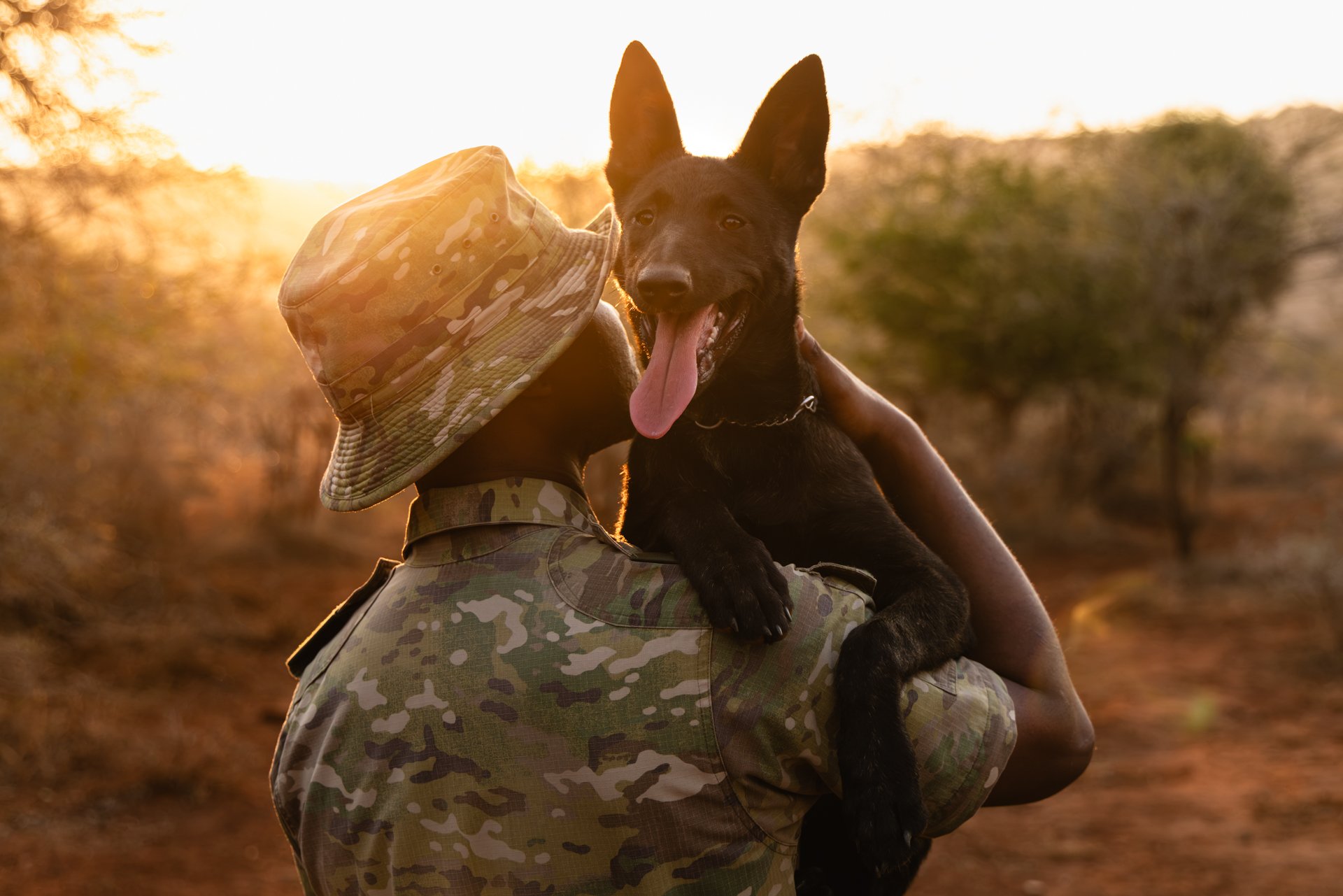
One of Hluhluwe-iMfolozi Park’s Conservation K9 handlers with Thunzi.
BUILDING THE BOND
There is another essential part of becoming a conservation K9: the relationship with the handler.
A working dog and their handler become a team.
The handler learns to understand the dog's body language and behaviour, while the dog learns to trust its handler and understand what is being asked of them.
That relationship is built through daily interaction and training.
The K9 anti-poaching team ranger needs to know when the dog has picked up a scent, when they are searching and when they have lost the trail. The dog, meanwhile, needs to remain focused on the task even when working in unfamiliar environments or difficult conditions.
The bond between K9s and their handlers is one of the most striking parts of their story. The dogs and rangers train together regularly, developing the trust they rely on when they eventually work in the field.
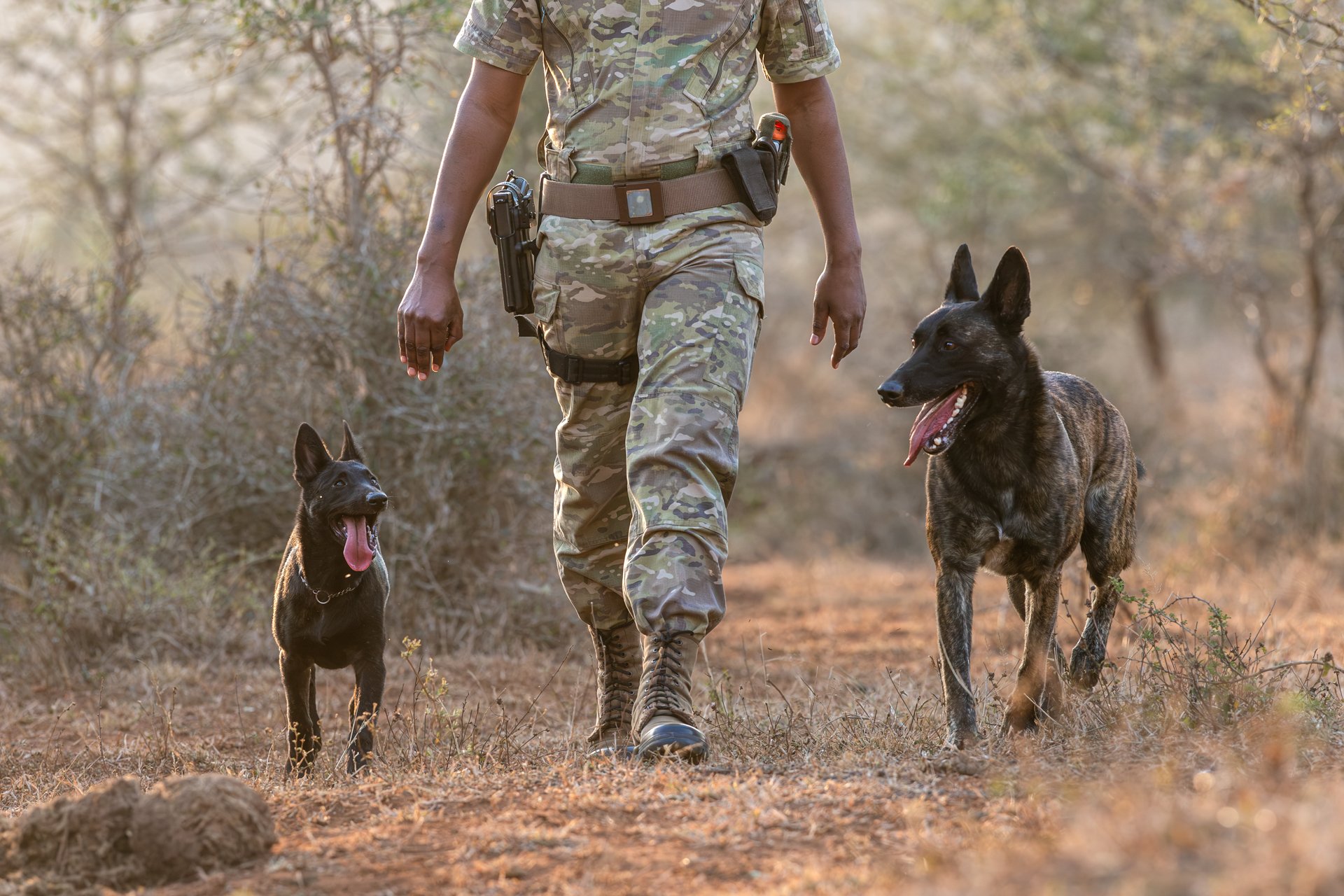
Thunzi and Chief walking alongside a K9 handler.
WHY EARLY TRAINING MATTERS
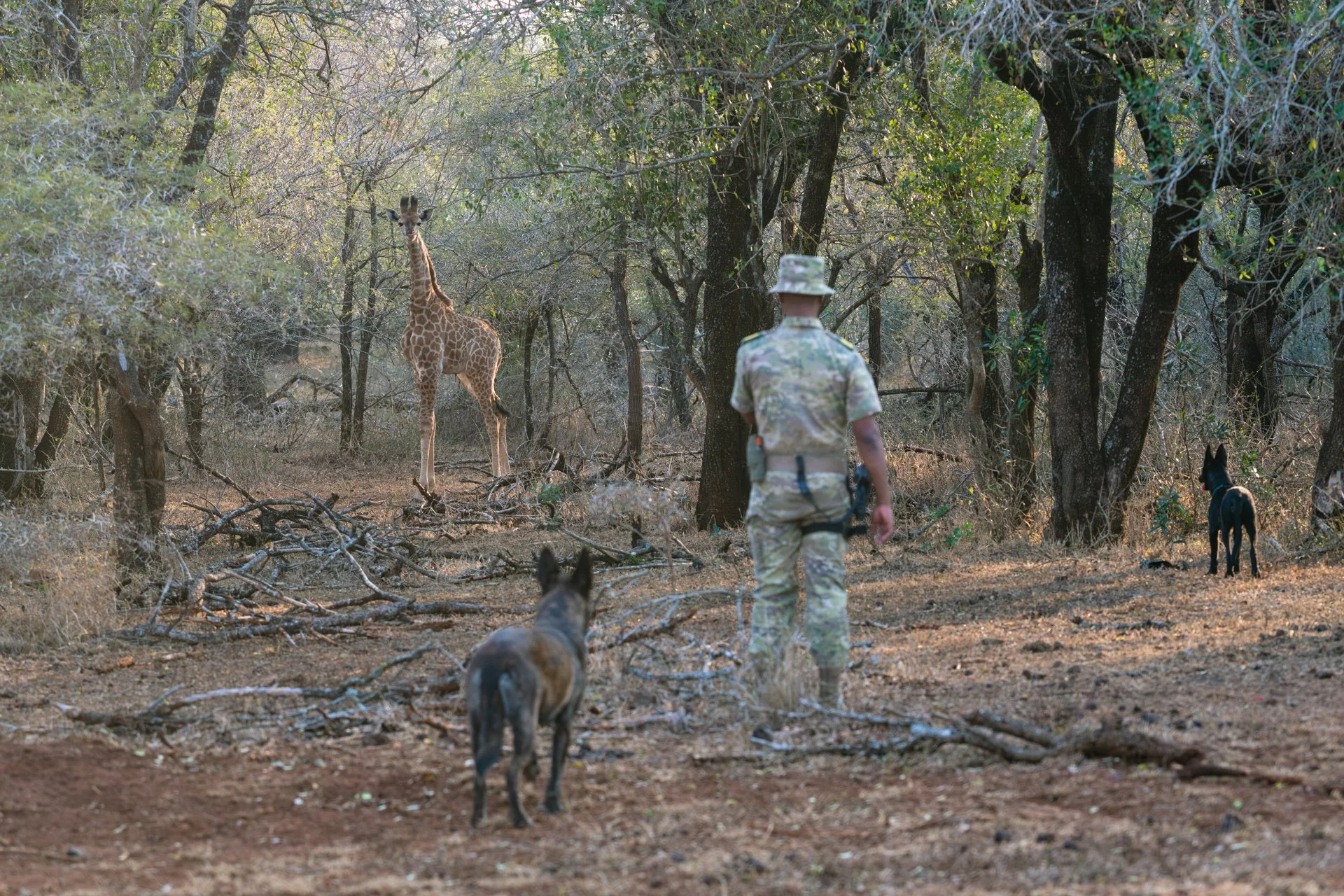
Thunzi being taught how to navigate around wildlife.
Training a conservation K9 is not something that can be rushed.
A working dog needs time to develop physically, mentally and emotionally before taking on the demands of operational work.
Starting early allows trainers to build skills gradually, reinforcing good behaviours and identifying the particular strengths of each individual dog.
Not every dog will have exactly the same abilities.
Some may excel at tracking. Others may develop particular detection skills. Some may have the confidence and temperament required for specialist operational roles.
The goal is not simply to train a dog to perform a task.
It is to understand what that dog is capable of and develop those abilities over time.
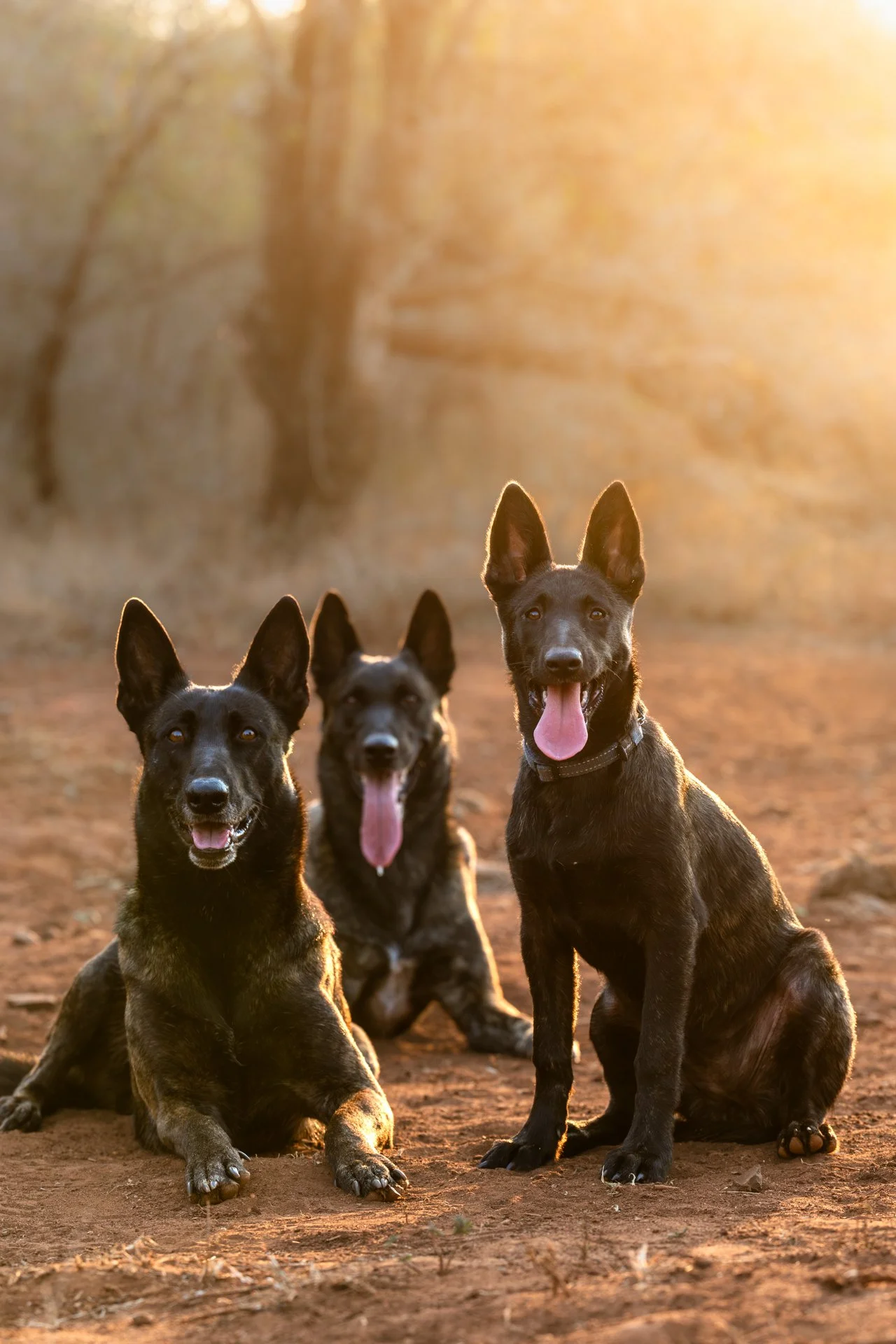
Thunzi smiling proudly with her team.
A NEW GENERATION
Thunzi and other young pups entering anti-poaching training represent the next generation of conservation K9s.
They are beginning a journey that will eventually take them from puppyhood into highly specialised working roles.
For now, their world is smaller.
Training sessions. Scent trails. Rewards. Play. Learning to work alongside their rangers.
But each of those small steps is preparing them for a much bigger responsibility.
As experienced working dogs eventually retire, new dogs must be ready to take their place. At Hluhluwe–Imfolozi Park, this transition is part of the K9 programme, with younger dogs being trained alongside experienced K9s so that skills and operational capacity can continue into the future.
FROM PLAY TO PURPOSE
There is something remarkable about watching Thunzi and pups like her at the beginning of her journey.
Thunzi as a puppy does not yet know what her future holds. She doesn't know that one day she will be working alongside a ranger in the darkness, following a human scent through the bush. She doesn't know that the skills she is learning could one day contribute to saving a rhino from poachers. For now, she is simply learning and playing.
One scent.
One search.
One reward.
One lesson at a time.
And with the right training, patience and partnership, those small beginnings can become something extraordinary.